A Year On….

44F1B232-0344-459A-94C7-44FC712305B2

4.4.19

I am on the train to London this morning. I have a table to myself. I have burnt my tongue on my coffee, but otherwise, all is good with the world. The Uckfield to London line is lovely – quiet and pretty. It’s cold but sunny today. England looks glorious. I have checked my phone…… there are 24 days until the London Marathon. Last year the London Marathon broke another world record: the most money raised in an annual single day charity fundraising event for the twelfth successive year. In 2018, runners raised £63.7 million for charity. It’s a really, really special event. This year, 414,168 people applied to run. Around 40,000 of them, from around the world, are in the final stages of race day preparations. They feel nervous, excited, confident or undertrained. Of the 40,000 runners, a significant number are fundraising. The love in these people. The passion. The journey that they’re on.

Race day 2018:

I made friends the moment I left the front door with my race number pinned to my chest. Smiles. Tobias and his family on the platform, helping me find my way to the start line. Tim on the train, in his 70’s, whose wife had forbidden him to run this year because he was awaiting surgery. He asked me my story. I told him. I told a complete stranger. My saddest story. Except on marathon day he didn’t really feel like a stranger. He found me online afterwards and sent me a message to congratulate me. I arrived at Waterloo train station with my debit card and my mobile, absolutely desperate for the toilet. A homeless lady was giving out change to the runners so we could use the loo. I repaid her as soon as I could.

We were allowed up to the London Bridge platform in small groups. As I waited at the bottom of the escalator to get up to the platform, a lady asked me about the run. She was on her way to visit her son in rehab. She wrote down “Addaction” and looked me in the eyes. We probably had a lot in common. She stroked my arm as she wished me luck.

And on the way to the start line the sun shone and shone. It shone as though we were lighting it up ourselves.

The Start Line:

Everyone was running for something, something close to home. Everybody has something. We were running to raise money so that we could make things better. Such hope. Such faith that something can change. You hugged people. And when you hugged people you threw your chest into it, you threw your heart, your body into it. If there was ever a physical way to show support and joy and love, and to say, “I know why you’re doing this,” and “I know what this means to you,” and “it means that to me too”, it is this. Joy and hope and faith and strength. Something good will come out of this. This is the best face of humanity.

Thinking about Eva kept me going. Remembering why I was there. The familiar faces I saw: my cousin and his wife, my friends, Eva’s friends, my stepson’s smile, my wonderful family and my eldest daughter with ice pops. I don’t know how the love becomes energy, but it does, it really does. The gift of bumping into a friend 6 miles or so towards the end – I needed that too. I just managed to overtake the man carrying a washing machine on his back before crossing the finish line. I cried and I cried. My biggest apology.

35D1E4BF-A09D-436F-8A87-8D5AC913340D

It’s nearly a year since I ran. My final total was £7692,01. I am in London to visit Addaction’s Head Office and to find out how your money was spent. I meet Alexis, with whom I had regular contact with over the course of the marathon training. It is the first time we have met in person, the first time we have heard each other’s voices. She gives me a strong hug, shows me the office and makes me a coffee. And she has so much to tell me.

Addaction has an annual income of around £65 million.

  • £55 million comes in through commissioning (local government paying for local services). Commissioning is tight. It covers the bare bones of services.
  • £9 million is from lottery funding.
  • £1 million is from fundraising.

Addaction has a small but committed group of regular donors. Fundraising is hard work. It might be easier for them if they were to use photos of people suffering to elicit sympathy, empathy, all the kinds of emotions that encourage us donate to a cause. Addaction has a strong ethical stance on this – they will not compound the stereotype. They are absolutely committed to reframing the narrative around addiction. This is absolutely vital – changing the language, directing the dialogue, positively influencing and educating the media, lobbying the government, influencing the agenda for the new drugs strategy. Influencing change. We desperately need change.

Addaction is working, hard. Its previous position, to not become embroiled in politics, has changed. They are taking strong stances on issues. They are asked to comment on appropriate stories in the media. And they comment. They have taken on a Public Policy Manager to lobby the government. They lobby. It is all working. A recent rise of over 700% in heroin withdrawal drugs (which would have put many drug charities into the red overnight) was lobbied and lobbied by Addaction, and was acted on by the government and the problem went away. The first license for a drug testing facility (such as those provided by Loop at festivals) was granted to Addaction by the Home Office this year after months of work. This means drug users can have their drugs tested, given immediate results about what they contain, and given non-judgemental harm reduction advice if they decide to take them (many decide against this when they hear what is in them). People will take drugs. But we can stop the deaths.

The money you gave funded programmes like the youth programme run by Addaction called “Mind and Body”. This is a hugely successful programme run for 11-18 year olds to decrease and prevent addictive behaviours, in this case self-harming. Unsurprisingly, statistics show a strong link between self-harm and suicide. 91% of young people who attended Mind and Body had stopped self-harming by the end of the programme. Stop for a second. Take a deep breath. Absorb that. Could be your friend’s child. Could be your child. Might have been you once.

It is not an exaggeration to say that it saves lives. I honestly don’t know how to say thank you enough.

Marathon day is joyous. It is the best face of humanity. It is love and it is tears, it is hope and it is faith. This one day. But in reality it is so much more than that. The huge emotional investment goes on for months. It may be quieter, it may be steadier, but it is there. More beautiful still, the work and the commitment and the love and the faith and the hope go on throughout the charity sector all the time. There are over 1500 employees at Addaction and over 800 volunteers. They are changing the way society looks at addiction. They are changing the way that people suffering with addiction are treated, by the public and by the law. This really, really matters.

And the love and the faith and the hope go on through all of you. All of you who have read, listened, followed, supported and run with me, who tracked me and messaged me and donated huge sums of money to this hugely important and personal cause. We have changed things. We are helping. We are all part of reframing the narrative.

The love is not just there on marathon day. Marathon day celebrates it and is wonderful and loud and overt and happy. But the best face of humanity surrounds us. It surrounds us all the time.

Some final words….

461C3E67-B29F-4793-8C36-CAA1A7499408

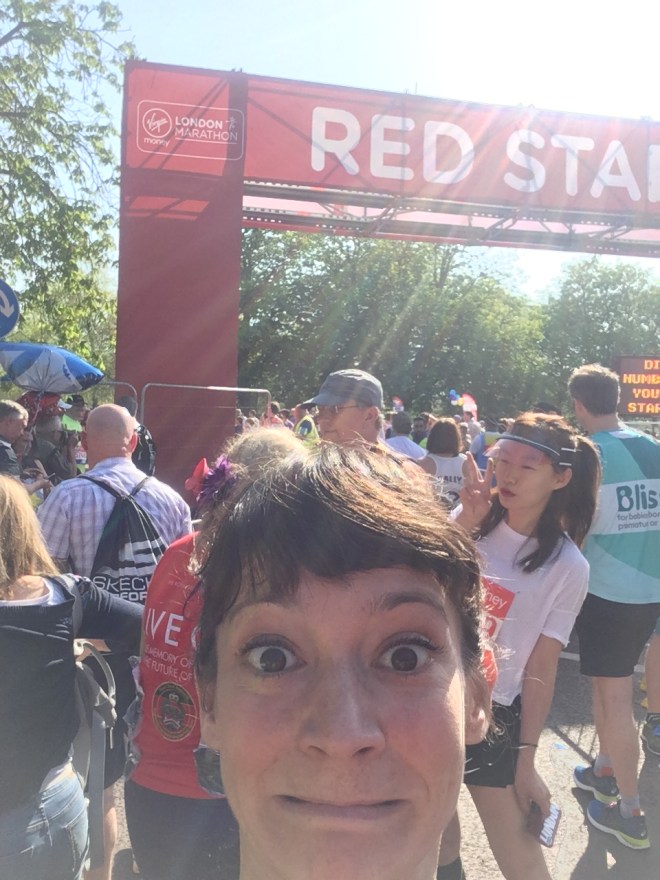
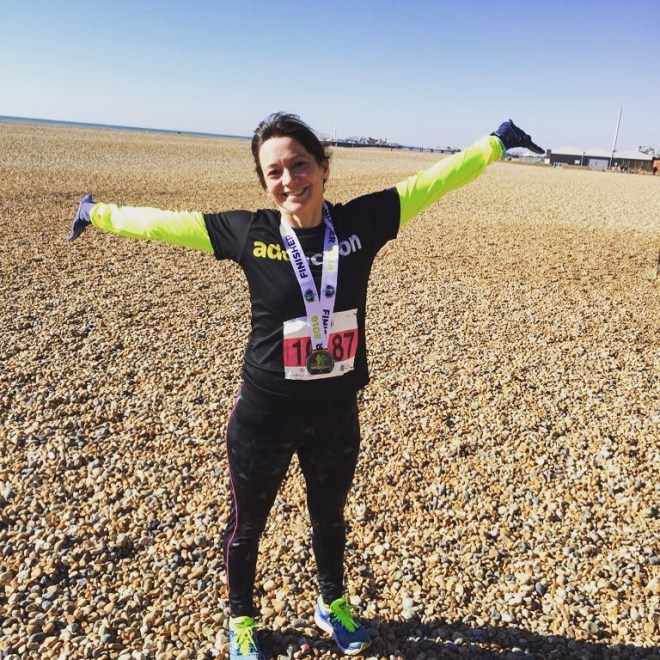
I DID IT!!!! It was unbelievably hot (I was actually sweating a bit at the start line), and there were definitely lots of moments when I thought I couldn’t, but I DID. It took 5 hours and 12 minutes and I felt every single second. It was the most incredible day and I was surrounded by the most inspirational people. The crowds are just phenomenal. Everyone wants you to succeed. If you’re thinking about it, do it. You won’t ever regret it. It was absolutely amazing and I LOVED IT. I cried crossing the finish line, the type of crying when you can’t get your breath and you make funny noises by accident and you look a bit weird….. so I declined an official photograph – but here I am….exhausted and a bit delirious, but absolutely made up. 7 months ago I just would not have thought this possible. It still feels completely unreal.

21A9B441-1912-4FDD-9CEE-149E56A4277D

On the fundraising front I have now crossed £7000 which is just unbelievable, so, as ever, thank you. As funding everywhere is cut, this is money that is so badly needed by Addaction and as I said previously, we really are changing lives. I thank each and every one of you. The Virgin Giving page will be open for a few more weeks so please donate if you haven’t already! The link is at the bottom of this post.

So, last month was meant to be my final blog but it seems I have found my voice and I just have a little bit more to say. So here it is, I promise, the final (and much shorter) blog.

This has been a really, really emotional 7 months for me. I just never really had any idea what lay in store after I decided to run and start this blog. It’s been tiring and elating. It’s been a steep learning curve. Here are the most important things I’ve learnt:

– Marathon training hurts. I went on countless runs that I didn’t feel like doing, I have had to toughen up (my not very tough) bottom on the bike, I have had to toughen up generally, and despite being Northern I am not that great in the cold (sorry Dad). And my knees will NEVER let me do this again.

– Bikes aren’t as bad as I thought. The “no underwear and Vaseline” advice from the bike shop wasn’t a joke.

– People really care. I have been sent the most beautiful encouraging messages over the last 7 months. I’ve had people just saying “keep going”, “well done”, “thank you”, and people telling me personal stories of their experience of addiction. The statistics tell me 1 in 5 of us are affected by addiction, I’m not sure I’d have believed it before, now I do. As I said in a previous blog, many more of you have experience of addiction than I ever knew. And that’s the thing isn’t it. None of us talked about it. So what I’ve learnt too, which I think I knew a bit before, is that we all wander around, getting on with life, we all reply “good thanks”, and that “we had a lovely weekend” and “wasn’t it nice that the rain stopped and the sun shone”, and “isn’t it lovely now the nights are lighter” and it’s nice to talk like that. But no one has nothing. Everyone has something they need support with. Everyone needs empathy every now and then, everyone needs a rest or a break, or reminding that they’re loved. Always Be Kind. Whether you have an addiction, or a relative or friend with addiction, or whether addiction isn’t an issue you have to deal with at all, we all need kindness.

You have given kindness to me in spades. Some messages told me how much the blog has helped people. You have no idea how much your support and messages have helped me. As I said in the recovery blog, this marathon just would not have happened without the love and support of my family and friends.

So, some special THANK YOUS:

– Sarane Brennan for your exquisite handmade Christmas quilt which we auctioned on eBay. There was so much work involved for you, and it’s absolutely gorgeous. Thank you so much for a really wonderful donation.

– Cathy Owbridge – for the gorgeous “Always Be Kind” prints that we sold. Again, so much time for you, and they’re so beautiful. I love walking past mine everyday and knowing where it’s come from.

– Emma, for the wonderful card of support that came through the door at the beginning just as I was ready to pack it in and for the wonderful gift of recovery swims.

– Dawn, my living room is full of cards and postcards with words of encouragement.

– My March 25th runners and supporters, who came out in force to see me through my longest run. And Sarah Smith for having the idea! It really was the most wonderful day and I will always remember it and all of you who came out to support.

– My runners: Laila (for coming back when I stopped, for seeing me through the first dreadful 3 miles, for all the enthusiasm and support), and everyone I’ve run with: Harriet, Kelly, Sarah Peck (my first ever 13.1!), Kate, Andrea, (Mark for the lift!), George, and all the offers of running company.

– Alan Law, physio extraordinaire who gave his services for free to help see me through this with proper dodgy knees. He is a wonder physio. If you need help and you can get to Horsham, go and see him.

– Nev’s parents, Christine and Melvyn, and Kath and Jon, who have constantly helped with childcare, dinners, support and love, and who we couldn’t be responsible adults without – it would all just fall apart.

– My husband Nev, who’s unwavering support, through this and every aspect of my life, allows me to achieve what I want, whether it’s passing my grade 1 ukulele exam or running this marathon. I couldn’t do any of this, any of anything, without you.

– My parents and my brother. I have THE MOST WONDERFUL family, and along with Nev are my absolute best friends. We are a proper team, and I absolutely adore you all.

To all of you that have read these blogs, THANK YOU. I know they are difficult to read, I feel so incredibly grateful for all the support.

For me, these blogs boil down to this. Addiction is a mental health problem, and as a society we need to be compassionate, not judgemental. Perhaps because of my view on this, and my experience with addiction, and the fact we lost Eva, what I value more than anything in people is kindness, compassion, lack of judgement and empathy. I am not perfect, not by any stretch of the imagination, but this is what I value in others and so this is what I surround myself with. I learn from these people how to be better. And so, really, it should never have been a surprise to me how well received this blog has been and how well supported I’ve been, because these are qualities that all my friends have. So as my friends, this is what I ask. Remember Eva. Remember this blog. Remember that everyone needs compassion in their lives. Don’t judge – we don’t know what background people have come from, and we know nothing of their battles. And if you hear someone talking about addiction in unfair terms, and you feel comfortable, challenge it. If 1 in 5 of us are affected by addiction, there’s probably someone else in the room that will be really glad you spoke up. You will be speaking up for me, and for Eva, and for my family. And these small changes are how we change the world.

So, for sponsoring me, for reading, for supporting me, for your empathy and kindness,

Thank you all so much X X X

https://uk.virginmoneygiving.com/fundraiser-portal/fundraiserPage?pageId=854688

Here We Are Now

This is how my March finished! Last weekend, 26 friends, colleagues, and someone I had never even met (thank you Chris!), gave up their Sunday afternoon to see me through 18 miles. I was SO nervous. After a dreadful run a few weeks ago, I just didn’t trust that my legs would get me through it. They did. My legs and my friends. You never saw a chirpier group of long distance runners! 18 miles and 26 friends! It was WONDERFUL. It was MAGIC. Then we had a couple of drinks and a bite to eat at the pub. All the talk about the power of community in my last blog……. this is it. This is really it. Thank you all so much. It made me so happy. And we tipped £4000! So after smashing every target so far, I am setting a final one, £5000. 4 weeks left, let’s see what we can do. If you haven’t already, the virgin fundraising link is at the bottom of this blog…. any sponsorship is hugely appreciated. If this is the first blog you’ve read, I am raising money for Addaction, a charity that helps support people with addiction and their families, in memory of my sister, Eva, who died aged 24 from alcohol addiction. The amount of money we’ve raised so far is life changing for someone. From the bottom of my heart, thank you.

And now the blog…..

I found my notebook from 2011, from a year after Eva died. It was never written to be read. But this final blog, this is my last chance to say what I want to say. And this is what I want to say.

23.7.11

Eves,

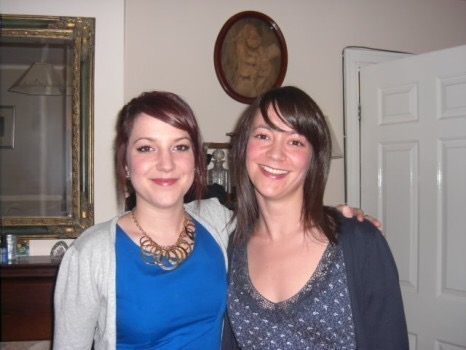
I am sitting in the garden of the Juggs pub in Kingston, the day started beautifully so I’m in a denim skirt and a New Look blue checked shirt, trying hard not to put my cardigan on because it’s meant to be high summer. I have a pint, and the paper, and I have just smoked a Marlborough silver. Didn’t really enjoy it to be honest, but I’ll have another with my next pint I’m sure. I am reading a review of a book, called “Say Her Name”, about a woman who died in an accident. It’s written by her husband. He wrote it to keep her alive he says, “Because one’s biggest fear is always forgetting”. And so, I am finally starting to write to you, like I have always planned to. He says it was painful to write, that it didn’t make it easier, that it made him crazier, that it made him miss her more….. but I am worried I’ll forget, and I’ve been thinking about you so much over the last week. And then yesterday, Amy Winehouse died Eves, and this morning I cried and cried, for her, for her family, for us, for you. I feel sorry for myself a lot you know,  because I miss you. When the news came on about Amy last night I left the room, I had to, I couldn’t listen to it, but I felt I was making  a scene and I’m sure I talk about you when I shouldn’t, when I know that it probably makes people uncomfortable, but I can’t help it, I miss you all the time and if I could I’d tell everyone about you. And I always say the same, you’re a better person than I have ever been, than I ever will be. About how pretty you were, just gorgeous. I have so many favourite photos, although I wish I had more. I love those photos of you before we went into Beverley that night. I don’t remember what we did, what we talked about or where we went, but you were wearing that beautiful blue dress, with that interesting back, bright blue, and you looked amazing. Your skin was glowing, glowing, and your makeup was perfect. And there’s a photo of the two of us, your smile is so pretty, not manic like mine is a lot of the time but calm, the way you always seemed to be. Calm and really beautiful. I wish I remember what we did that evening.

CE7D09AC-0269-430B-ADFB-A080FFC2E99D

I was meant to start back at work on March 15th after you died, but I got back late on the Sunday and drank so much with the neighbours that I couldn’t go in. I went back on the Tuesday. Too well. Talking about it like it had happened to someone else, so detached. Then, a few weeks later someone mentioned someone she knew that was alcoholic and the difficulties the family were having and I broke down badly. I cry now because I miss you, I cry for what could have been, for what we could have had. Sometimes I imagine us living together and I feel like I lose my stomach. Because if things had gone the way they should, you’d be with me now, telling me that my moustache is too blonde after I bleach it (like Mum does), telling me what I look good in and what I don’t. I could talk to you about all the problems I can’t tell anyone else about, although I have been able to talk to all of your friends you know. Al, Jade, I am at my most comfortable with our friends at home because they understand, they lost you too. Everyone lost you. We have such a special bond now, not that we didn’t before, but you’ve changed things now. We’ve all of us experienced such sadness, such loss, that we’re close. But it’s closeness for you. We miss you Eves, we really miss you.

31.7.11

I listened to the funeral songs yesterday for the first time in months, I sat on a bridge looking over the Downs and I smoked. Then I made a playlist for you. Arctic Monkeys – I Bet That You Look Good on the Dancefloor, I drove us somewhere and you’d bought it, and it was the first time I’d heard it and you always looked good dancing. Au Revoir Simone, Sad Song, you forced me to listen to it, I love it now. Banda Espuela de Oro, it was on the Amorres Perros album, I taught you the lyrics and what it meant and we sang and did actions in the car on the way down Norwood on the way to Tesco. The Cribs, Hey Scenesters, reminds me of you dancing somewhere, you stamped, looked so good. The Kooks, She Moves In Her Own Way. We talked about songs we’d have at our funeral. I chose Circle of Life (as a joke), can’t remember what George decided on, but I know you chose this. We didn’t go with it in the end Eves, hope you weren’t too mad! I still listen to it and it reminds me of you. Libertines just because it was the Libertines. I just picked my favourite, Don’t Look Back Into the Sun. Remember the Pete Doherty gig in Hull when Willow got on stage and crowd surfed!! And then we actually met him and he sang For Lovers down the phone to Dan? Amazing night. NYPC – Get Lucky – you introduced me to them and I run to it a lot now, and I always remember how I learnt about them. Patrick Wolf – Magic Position. We drove home from York once and danced in the car to it. I love it now, love it. All good memories Eves, and wonderful songs. All you.

February 2017

9FBC4856-B645-4D99-BCF5-CED934CA7804

Watching May and Beth together is such a joy, I’m so grateful they’ll have sisterhood. Chats over boys, nights out, squabbles, rude jokes. We were so lucky, simple joys, chatter and play and constant piss taking, mostly lovingly applied, sometimes shouted in anger, but always on solid foundations. All I do every day is try to emulate our childhoods for May and Beth. For me to be trying so hard means it must have been really good. But I know it was. Rose tinting is inevitable, but I honestly think I see it clearly. It was so so happy. Why am I writing? I have started to write so many little things to you, started so many letters. There must be something I feel I need to say. Maybe it’ll appear to me as I write.

I was at home for the anniversary, I always have been. It’s always an unpredictable day. I always dread it. It’s never as horrendous as I imagine it’s going to be. I don’t know why. Maybe it’s because the date doesn’t really matter, because the memories are so shallow of that day all the time, they reappear in seconds without warning from the slightest trigger. I remember Mum’s face, where I was in Mum and Dad’s room, the feeling of dread when the phone went (we all knew it wasn’t a prank call), all scorched into my brain – no need to revisit them. Unuseful, hurtful memories. Why can’t I remember useful memories? Your smell, your clothes, what we talked about in the car to Asda or on the way back from York? I ache to remember those conversations now. Or to dance with you once more. I do remember things that are important sometimes. I remember vividly your hands and nails. What I regret is not cherishing it, all those times and nights out we had. Not remembering to remember, not absorbing it or trying to turn it into a forever memory. How could I have been so stupid? Taking all that precious time for granted? Why are you not taught to never forget the outline of your sister? It should be the first thing people tell you: DO NOT FORGET HER OUTLINE. AND DO NOT FORGET HER SMELL. You cannot take a photo of her smell. Hold it. It won’t come back. I have not since walked past anyone wearing your perfume. I can’t remember what you wore.

6.3.18

Eves,

So here we are. The London Marathon is days away now. I’m excited. I remember making the decision to run whilst Nev and I were on honeymoon. We discussed it, whether or not I could run, whether I could find the time to train, whether I could raise £2000. I had a large glass of wine with lunch and I lay down on the boiling sand and I swam in the sea and I felt completely alive and I felt fire in my chest and I felt my fists clench and I decided YES. I didn’t think about getting ice in my hair on a cold run, or injury, or running when I felt a bit under the weather, or the emotional toll it would take on me. And yet. And now. Here we are. Seven months later. I’m not sure I’m ready. But I will be there, I will cross the start line, and I will have my Addaction tshirt on and I will be thinking of you. This is all for you.

I miss you. I really, really miss you. And this has been great because I’ve spent so much time thinking about you. And because I feel in some way I am atoning. That telling people about my guilt makes me less culpable. I do know that it doesn’t. I do know that. So I am so so sorry. For every time I shouted at you or sent you abusive messages for causing chaos, for every time I threatened to cut contact with you if you didn’t stop, for every time I made a back handed comment, I was desperate and I didn’t know what to do and I felt like I was losing you. And then I lost you. My desperation doesn’t excuse it. It was mean. And you needed something so different to what I gave you. I am still learning and I am still reflecting and I am still trying to be a better person. I know my faults. I try all the time. I wish with all my heart that I could change it. But I can’t now. So here I am, after months of gruelling training, ready to take on 26.2 miles. Saying sorry really. The biggest and most heartfelt apology I will ever make. This is all for you.

I don’t believe in an afterlife. But my take on these things is a bit illogical now because I still tell you things sometimes and I still write to you sometimes. I feel peace when I think of you. And I hope that there’s forgiveness. I have to believe that there is. I will always, always, always love you. Run with me Eves. See me through it. See me over the finish line. I’m so sorry and I love you x x x

https://uk.virginmoneygiving.com/fundraiser-portal/fundraiserPage?pageId=854688

https://www.addaction.org.uk

https://www.alcoholics-anonymous.org.uk

Home


Recovery….

BD291577-20A1-43B4-B349-78383B481978

On Sunday 25th February I completed the Brighton Half Marathon in 2.04. I cannot tell you how proud of myself I am. I still remember the first 3 mile run back in October. It felt dreadful. I never thought I would get to this point. So I am really, really chuffed. It has also scared me – in a few weeks I am hoping to double this distance! I have been training since October to get here, but now it all ramps up. I’m terrified. It feels a million miles away. But, you’re behind me, and I plan to keep going, just do what I can, head down. I have wonderful supporters in you all. Someone suggested last month that I organise for people to come and help me on one of the long runs, so on Sunday March 25th, I am planning an 18 miler and I already have a little group of people, of all abilities, who are planning to come and run anything from 1-18 miles along the course with me, to keep me going. I’m hoping May will run the last mile with us. We will start somewhere in Brighton about 2pm and finish at the Anchor pub in Ringmer about 5.30 where we plan to eat and drink with friends and family. This will be a SLOW run. So, if anyone fancies it, regardless of ability, or even just fancies coming to the pub for dinner and drinks, let me know. It really is the more the merrier.

This month’s blog is about recovery. Recovery is what this is all about. This is what your money’s for. Recovery is hard, it’s long and it’s brutal. But for the people involved it’s necessary and life saving. I have been a bit lost trying to write this month’s blog, I’ve struggled to get started because when it comes to recovery, I have no comparison to draw. There is nothing I have done in my life so arduous or important. I don’t have a clue what’s involved. So, I have had to research and read books and talk to people who do know. You can find statistics somewhere about recovery and maybe I should have done that. But I haven’t. Because what interests me are the personal stories and experiences, how people do it and what they go through to get there. It’s all about the people. The science is interesting and helps to understand things, but this blog has always really only been about the personal, the people involved, because I am involved, and this is what matters most to me. So to help me find out more about recovery for people with addiction, I read blogs and books, and I spoke to Beth at Addaction, and I spoke to Sharna who has lived experience of recovery. This is what I found.

Recognising there’s a problem

Recovery has to start by the individual recognising that there’s a problem. AA has a 12 step programme to aid recovery. The first is this:

“We admitted we were powerless over alcohol – that our lives had become unmanageable.”

Most people I know drink. I drink. Alcohol is so embedded in our society and in our culture, alcohol is so much a part of who we are. And there is such a spectrum of “acceptable” drinking. It makes alcohol dangerous because the addiction can be so insiduous, so easily missed, so easy to hide. It makes it so easy to deny, to others and to yourself. And the stigma surrounding alcohol misuse is still so ingrained is us as a society, that this obvious first step is not an easy one. Recognition of the problem has to come with a letting down of defences. So this admission to being powerless over alcohol, this readiness to seek help, this mental preparation to change, there isn’t a quick process to arrive here. Then a discussion has to happen. A GP, an AA attendee or sponsor, a friend, a family member. Words matter. Once these words are spoken, they’re spoken. These are words that can’t be taken back. This is not discussing options for dinner or talking about the weather. These are words that weigh heavy, they hang, these words mean something important, these are considered words, these words have consequences. These are powerful, relationship altering, direction changing, humbling words. And the consequences are significant. I cannot imagine the fear. I cannot imagine the bravery.

I don’t remember being a part of this discussion with Eva. I tried to be. I tried to broach it gently, I took her for coffee, I tried to let her know I was there. But although I thought our relationship was good at this point, we had already been through tricky times whilst she was being treated for her eating disorder. She knew about addiction before she became an alcoholic. I could never understand. And because I’d found her eating disorder hard to deal with I lost the privilege of being a confidante this time. I don’t remember, but at some point she must have spoken the words because treatment started.

INTERVENTIONS

Then? Detox. Depending on your alcohol intake you either detox at home in hospital. Those with higher intake, like Eva, have to have detox as an inpatient because of the risk of seizures.

Then? GP appointments, alcohol liaison nurses, rehab waiting lists, rehab, AA meetings. Each bringing with it an inventory of actions, brutal self analysis, rebuilding battered self worth, coping strategies, short term goals, reminders of why you want sobriety so badly. Energy sapping, motivational, emotional, tiring. Worth it.

Then? Minutes, hours, days, weeks, months, lifetimes of sometimes very hard fought sobriety.

How does it work? I have just devoured the most wonderful new book. The Unexpected Joy of Being Sober is a Sunday Times bestseller, released in December 2017, by Catherine Gray. It has taught me so much about the journey to sobriety and Catherine explains things so wonderfully. She provides clever analogies to explain the physiology of why the brain finds it so difficult to readjust. Firstly, she notes an academic paper that talks about neural pathways in the brain as hiking trails. “The more a hiking route is used, the smoother, wider and clearer it becomes. It becomes the default, easiest route. Should you need to forge a brand new path through the forest (or form a newborn sober pathway) the paper points out it will be arduous initially. ‘At first, this new path will be narrow, difficult and slow…..Over time it will become a well-worn, comfortable path. It will be just as easy as the original path'”. Your brain changes with recovery, neural pathways remodel. It doesn’t happen quickly. It doesn’t happen overnight.

Sharna, the woman I spoke to about her lived recovery was amazing. She was so open, and rightfully proud of her recovery, and I was told that no question was off limits. So I asked them.

I asked how hard it was. At the right time, she said, it was easy. She said it was easy because she was absolutely desperate. She’d hit rock bottom. She had tried to stop drinking before but hadn’t managed, which she put down to the fact that she wasn’t truly doing it for herself. She said this last time was different. She threw herself into AA, into the 12 steps, into sobriety, and it worked.

I asked how good life was now. What did I imagine her to say? A struggle every day? That she spent every minute fighting? She said it was good. She felt under control. She said that now her coping strategies had to be different but she’d spent a lot of time learning about that as part of her recovery. She said that life can be hard sometimes, but life can be hard for everyone sometimes, and that it is a hell of a lot easier without the alcohol. Sharna also said, which I believe wholeheartedly, that only someone who has addiction can truly understand. So the other thing that really got her through was the recovery community. After I left her, I couldn’t stop thinking about it.

Catherine Gray’s book talks about this too. She interviews academics who talk about the “language analogy”. I am going to quote directly from her book again, I can’t explain it better. Catherine says “learning how to socialise without drinking is like learning a whole new language, say Spanish. And having to resist using our mother tongue.” This is why it is suggested that people socialise with sober friends initially, to try and remove the allure and the ease of “slipping back into English”,  having a drink. From what I can see, peer support during recovery is huge. When I started to look at the recovery community online, there seemed to be quite a presence. Sharna agreed, she thinks there has been an increase in awareness and recovery groups over the last few years. We sat with a coffee in the Cascade Creative Recovery Cafe in Brighton, run for people in recovery, by people in recovery. It was warm, it was welcoming, people came and went over the course of our chat. There were posters and adverts for support groups, AA meetings, timetables, Al-Anon meetings, the Cascade Recovery Choir, Crafternoons on Saturdays. This cafe is loved by people, a lifeline for people, a place where people can be listened to and heard and supported by people who know, who understand. From our chat, and from the chats Sharna had with people who were coming and going, I started to really feel the significance of it. Recovery is an ongoing journey. Other people can support and love, and that’s vital too, but no-one will understand like another person who has been affected.

I understand community. I understand it’s power, it’s impact, it’s results. I have not been running alone through these months. I have had support at home to free my time up to write and to run, I have run with numerous friends, friends who came back for me when I needed a rest, friends who have spurred me on and kept me going when I was ready to stop, friends who have sent supportive cards, friends who have sent supportive messages, or messages to say that the blog and the running is helping them in some way. I have not been doing this alone. I have been doing this with all of you. I couldn’t be doing it without you. I honestly just would not have kept going. You are my support. You are my community. Community helps people run marathons. Community helps people dry out. Community helps keep people sober. Community helps keep people alive.

I read a quote on a sobriety Instagram page, hipsobriety, the other week. It said, “We’re all just walking each other home”. I can’t say I go in for this kind of motivational quote much but I loved it, but I didn’t really know why. I wasn’t really sure what it meant. I have thought about it a lot, and this is what I take from it: we ALL have something. We ALL have something that is a challenge for us. None of us lead picture perfect, Instagram lives. All of us have vulnerabilites and we all have to help each other when we are at our most vulnerable. That is what thay saying means to me. On our way through life, we all need help and support at some point, and it is the companionship, the people, the communities that walk us home and get us to a safer, more comfortable place. “We are all just walking each other home.”

I spoke to Addaction about exactly what they do to aid someone’s recovery. They support adults, young people, families. They give “wrap around” care, this is holistic, person-centred care to promote recovery. This means not just dealing with alcohol but looking at support with housing, benefits, therapy including Cognitive Behavioural Therapy, building self esteem and confidence. They provide some inpatient rehab beds, they support people through detox. They encourage participation in the wider community – employment, volunteering, exercise, allotments, boxing gyms, farms. Anything that they can access or do to improve someone’s self worth and provide purpose, and lessen the risk of relapse, and promote recovery, they will do. The young persons service works closely with the Amy Winehouse Resilience Programme, who oversee people in recovery going into schools to give assemblies and facilitate workshops. These are not preachy assemblies about the evils of drugs and alcohol, Addaction knows that doesn’t work. These are workshops working on self esteem, talking about peer pressure. When 1 in 5 of us are currently affected by addiction, directly or indirectly, this is just such important work and this is where your money’s going.

So what have I taken from reading Catherine Gray’s book, from speaking with Sharna? From Addaction? The message I take:

YOU ARE NOT ALONE.

YOU CAN DO IT.

IT IS WORTH IT.

I mentioned in the last blog that I drank after she died. This was not problematic drinking. I had a hangover once or twice, but it did not cost me more than money. I just drank more than I had before she died during my initial grief. And I told you that I drank for the same reasons she did – to escape my reality at that time. I could not cope with the fact that Eva was gone, I could never talk to her again, never touch her again, or smell her, or make her laugh. The permanence of her death was incomprehensible to me, and absolutely devastating. I have no idea what addiction feels like. I have no idea what recovery feels like. But I understand the pull of alcohol. I was grieving, and I took antidepressants and I drank alcohol to make my pain go away for a little bit. I preferred the release of it, the numbness, the dumbed down emotion, however short term, to the reality and the unbearable rawness of my life during those first few weeks after Eva died. Then I imagine not having access to antidepressants and not being able to drink to forget. Being surrounded by her death, being cocooned in it, being saturated by it, having to look at it in the face and not avert my eyes, having it whisper in my ear when I was thinking about something else, not just for a moment, but day after day and week after week. It is the worst thing that has ever happened to me in my life. I did not want to live every detail of it, like I would a wedding. I did not want to know what was happening to me, I did not want to remember, I did not want to absorb it. I wanted the days to pass without me, I wanted to wake up months later when it was all a bit more manageable. I could have coped without medications and alcohol, but why would I have wanted to? I did not want to be present in my life. Recovery for someone with an addiction is asking them to be present in their reality, and not just the initial reality they were trying to escape from. Their new reality. Recovery reality is having to come to terms with a new life, facing all the things you did in the throes of addiction, the chaos you caused, the relationships you neglected. Guilt, stigma, shame, regret, trying to apologise, build bridges, fear of relapse and the impact of that fear. In Catherine’s book she quotes a recovery saying, “The best thing about recovery is that you get your emotions back. The worst thing about recovery is that you get your emotions back.” And all this with absolutely no respite. You cannot just have a drink at the end of a bad day. You cannot just speak English for a while. There is no option but to LIVE recovery.
So those that you know, those who have spoken the words, those who are sober, and those that are surviving, those that are living, those that are thriving, they are some of the strongest people you will ever meet.
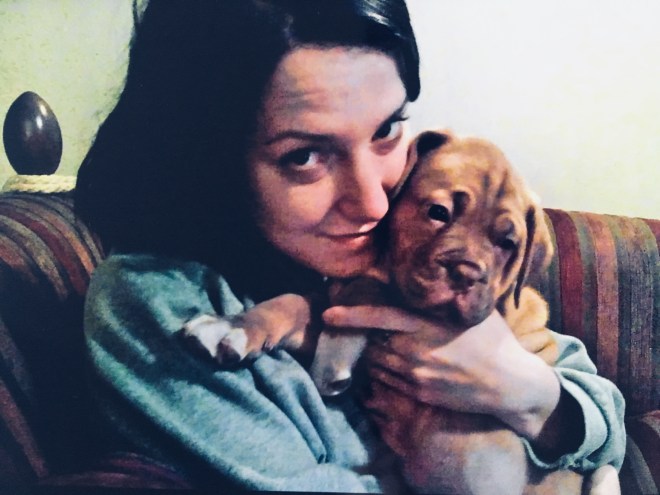
FD0DB90E-BC78-42BE-B0D4-9F53E64D32C3

How was Eva’s recovery? Hard I think. She was waiting for a place in rehab again. She worked hard for the sobriety she fleetingly had. For her it was really, really hard. And she lost.

How was my recovery? Hard. I too, will never be recovered. I cope with it, I get a lot of joy from my life. But I’ll never be recovered.

So, as ever, a huge thank you for reading, I am obviously aware that these are not easy blogs to read, but you seem to keep coming back, so thank you. I am really trying to get them read by as many people as possible, so please share widely if you can. And a huge THANK YOU to those of you who have donated so far. I have smashed the £2000 I was initially aiming for so have a brand spanking new £3000 goal! The marathon’s getting closer……. so please donate if you can! Here is the link to my Virgin Money Giving page:

https://uk.virginmoneygiving.com/fundraiser-portal/fundraiserPage?pageId=854688

And links to support:

https://www.addaction.org.uk/

https://www.alcoholics-anonymous.org.uk/

Home

http://ukna.org/

Cascade Creative Recovery Cafe, Brighton:

https://www.google.co.uk/url?sa=t&rct=j&q=&esrc=s&source=web&cd=2&cad=rja&uact=8&ved=0ahUKEwisk7PD4J7ZAhXrKcAKHRcpC5UQFgguMAE&url=https%3A%2F%2Fen-gb.facebook.com%2FCascadeCreativeRecovery%2F&usg=AOvVaw3KH63M7KVsPeq8NKPSNc1e

Catherine Gray’s book: The Unexpected Joy of Being Sober (all good bookshops and online booksellers)
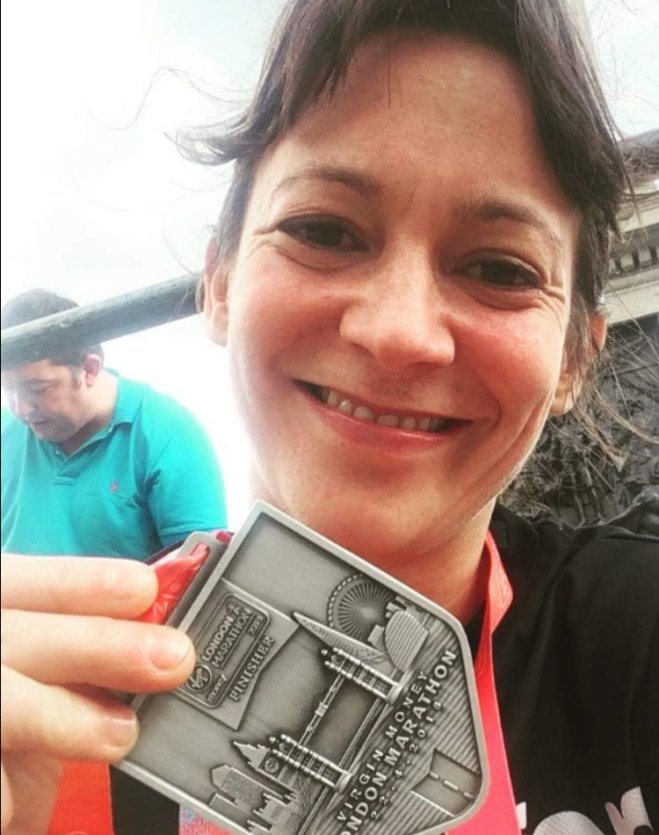
 

Stop The Clocks

n61412306_37154750_8209[1]

Running has been HARD this month, I feel completely let down by my bloody knees! I have spent more time on the bike. Nev played gin rummy with me for an hour the other night whilst I cycled, to pass the time, he thrashed me. I just need to keep going and keep my head down. It’s Brighton Half Marathon on February 25th, I’m desperate to finish it, it seems like such a milestone. If you’re in Brighton on February 25th, come and watch and shout for us all!

This is the fifth blog I have written. Up until now I have written each post assuming people don’t really have experience with addiction. It turns out that people do. So I am sorry if I have come over as patronising, I am supported but shocked by the number of people also affected. It turns out many of you understand and appreciate more than I ever knew. I also realise that many of you are continuing to live with addiction in your present. I want to make sure you know that the objectivity with which I have approached this blog is only possible because Eva died. That if she was still alive it is unlikely I would ever have been learning about addiction in the way that I am, and it is unlikely I ever would have been able to support her in the way I now know she needed supporting. It is really, really, really hard living with addiction, for both the person with addiction and as family and friends. I am sure you are doing an amazing job. There is help – the Addaction website, AA and Al-Anon websites are at the bottom of this blog. Keep going, keep loving and keep looking after yourself.

I have thought long and hard about whether to tell you about what happened when Eva died. I have decided that it is relevant, because I am writing about how addiction has affected me and nothing has affected me more than her death. It is emotional, it has been hard to write, it is much less scientific and much less objective than the other blogs so I have to ask your forgiveness for that. But it is my personal story, so of course it is relevant, because, to push the point, there is a personal story like mine behind every statistic you read.

Eva died on February 20th 2010. For all of us, this date is the hardest anniversary. Birthdays and Christmas are particularly hard because there is always, as with everything, a huge gap in our lives now that is all the more pronounced at family gatherings. February is a harder date because it is a reminder of the horror of that day and that time. This is what happened and this is how unnecessary it was, and this is what Addaction tries to prevent. This is the story behind the people and the charity. So if you can read, please do. This is now the history of my life, that I am sharing with you. I don’t want anyone to feel that I am writing this for pity. This is what happened to us. This is unembellished. This is part of our lives. And each and every one of Eva’s friends has their own version of our story.

This is what happened when she died:

The phone went at 5am. She had overdosed.

We sat round in Mum and Dad’s room. I don’t remember crying much for the first couple of hours. Then I couldn’t really stop. Over the course of the day we each got out of the house for a bit – I went to the shops and sat on the swings at the park and went to the pub with some good friends for a couple of hours. And then I went home and we reconvened and didn’t know what to say to each other and no one slept. We have always been a really close family, so this might sound like strange behaviour, but you have to understand that none of us was in a position to comfort the other. Over the years we have learnt how to help each other and what the others likely want or need, but this has taken a long time and I’m not sure I always get it right now. Hours after we got the news we were all in shock, lost and paralysed and desperate not to burden the others. So it might sound strange, but we each gave the others space whilst we stumbled through the first few hours. Cards came through the door – hundreds of them, nearly straight away. The first few were a shock to be honest, because the cards and flowers were a tangible acknowledgement of her death. There was no denying it had happened, however much you wanted to, when you were looking at a dining table so full of sympathy cards. People sent soup, hot chocolate, biscuits. Some people sent text messages, some people called, some people came to the door. Some people had no idea what to do and did nothing. I cannot tell you how comforting it was to have people talk to us and come in for a cup of tea.

I cried a lot. There was no big outpouring of grief. Initially I would have a sit down when I started to cry, but soon I just carried on doing whatever it was that I was doing at that time, making a cuppa, feeding the dog, showering, reading. The physical effects of grief weren’t really surprising. I was tired all the time, was achy, as if I had a cold, sometimes my chest felt tight and I couldn’t breathe, I got headaches, I was forgetful, I couldn’t concentrate, I lost my appetite for a bit and I was run down. And when they talk about sadness, anxiety and yearning as psychological symptoms of grief, for me the physical and psychological symptoms blurred. I did feel yearning and sadness but my chest felt it too, my heart felt it.

Some of my memories of that time are gone, some memories are blurry, some I could tell you down to the smallest detail. I remember a neighbour running around the corner towards our front door saying to me “It’s not true is it? Tell me it’s not” and I had to leave the house and walk past her because I couldn’t answer. Someone I barely knew at the time bumped into me and my brother in the pub and said to us, “God, have you heard about the young girl who was alcoholic, local girl, just died”. I got tattoos on my wrist, the same tattoos that Eva had, and I went for a drink afterwards and I chatted with people at the bar as if nothing had happened and I pretended to be normal. I did not know what to do with myself, how to fill time, how to fill my head with something, anything other than what had happened. We had to wait for toxicology and blood reports so the funeral was weeks later. I found that hard, it was a long wait. We got little booklets printed of Eva for the funeral with the words of the songs and some photos, and the printer bloke gave us huge discount and worked over his weekend and bought us flowers. The kindness of people was phenomenal. People cared intensely and truly. It was never just us that lost Eva, there were hundreds of people who had lost a hugely important part of their lives.

The funeral was surreal. We made the food for the wake, just so we had something to do in the morning. We drove up past hundreds of people who were stood in absolute silence in a queue watching us in the cars, waiting to get in. It was an incredible sight, all that silence. My brother, George, spoke and he was incredible. Wording was difficult. It was perfect. He told little stories about her. The story about her birth: Eva had a really traumatic birth. The doctors at the hospital told Mum and Dad that she wouldn’t survive and they had an emergency christening at the hospital in the middle of the night. Then, when she was fighting and she was surviving, they were told it was likely she’d be significantly brain damaged. But she smiled and she laughed early, and Mum says she just knew she was going to be ok. The story of when she passed her driving test: after her first journey out alone she drove the car straight into the garage door. I wailed. I wailed and I could not be strong and I could not hold it together. I was not dignified. The wake was full. Then, together with all our friends, we went into town and drank and drank. The next morning an old boyfriend of Eva’s came over with food for a full English.

As the inquest approached weeks later, newspaper reporters arrived at Mum and Dad’s door. They were sent away. Eva’s death was in print. But we wanted people to know her life and to know her, and it felt unlikely that was what they wanted to talk about.

Then…….life goes on. However much you don’t want it to, and you hate people for carrying on with their life whilst yours has collapsed, it just goes on. What you want is for people around you to be collapsing with you. That poem, Stop The Clocks, by W.H.Auden………. You want the world to pause for a bit and catch it’s breath. You want everyone to acknowledge and everyone to mourn. You don’t want life to go on regardless. Time passing means having to come to terms with a different reality and moving on without her. I mentioned to a friend a couple of years ago that I am scared all the time that she’ll be forgotten. She said, “Maybe you’re afraid that you’re forgetting?” I want to always remember her face and her smell and the expressions and the feel of her, but I do not remember them with the same clarity that I did. And that’s petrifying. It’s something I will never come to terms with. Time passing means there are more days between my present day and the last time I kissed her and smelt her perfume and looked at her eyes. That’s why I wanted things to stop where they were. That’s why just carrying on with life was such an awful thought.

92F0F37D-7689-4BA7-BB49-C91E1EDF2788

However unfair it feels, life does continue. Work, bills, the big shop. I didn’t cope for a while. Work was a good distraction and a relief but I spent weeks arriving in tears. I dreamt about her, woke up, cried in the car and by the time I got to work I was really good for nothing. Eventually a friend suggested I access the work counselling service so I did, and time passed, and I slept a bit better, and things slowly improved, as they tend to do.

I only know about my experience with grief. It is an intensely personal experience. But there are differences in grief when someone has died from addiction. Looking at DrugFam’s website, they list many differences I recognise.

Age: Eva was young. Her death was out of the natural order of things. And I can never, ever imagine what my parents have been through during the years of her illness and since she died. When my eldest daughter was born, I couldn’t help think of my parents. I had this incredibly precious gift, someone I was so deeply in love with, someone I felt so protective over. So far in this blog I have found words to write about my feelings. I lose this ability here.

Explanation: not all people were aware of Eva’s addiction. I’m sure people found out through word of mouth. I don’t remember broaching these discussions. Stigma will have made this harder.

Timing: the timing of it was bad for me. The unexpectedness of it in the midst of a really difficult point in our relationship has left me with huge guilt. I know objectively that my behaviour and approach to Eva’s addiction was the same as a million others with siblings with addiction, I know it is hard, I know I’m not a bad person, I could say those words out loud to the counsellor I saw, but my chest feels heavy. I feel guilt.

Relief: Drugfam talk about people feeling relieved at the death of a person with addiction. I cannot say I experienced that. But what I do do, when I come across someone older who remains addicted, is imagine where’d we all be if Eva hadn’t died. My gut reaction is that it wouldn’t be over. And this makes me feel guilty.

Press: this is an unwelcome added complication. My parents had a phone call and a knock at the door and they were sent away. And it was not helpful. And it was printed anyway.

Grief during life: Drugfam also talk about a grief experienced whilst the individual is still alive. A loss. I got my hair cut in Brighton years ago and I was reading a magazine article by sisters about how special their relationship was. I cried in the hairdressers, I was so quiet I don’t think he noticed. I hope he didn’t. But I completely understand this type of grief – I felt like I had lost her long before she died.

I met up with some very old and very good friends whilst I was visiting my parents in January and we were talking about this blog. They were there when Eva died and they came for lunch when I wanted to go for lunch and they came for coffee when I wanted to go for coffee and they came to the funeral and they knew Eva. But Rach said that despite being there through it,  she didn’t really know about it all. “The thing is”, I said to Rach, “I am learning all of this now, I didn’t know it either.” There is so much unsaid. It took 4 years before George and I talked about what we did the day we got the phone call. It has taken me nearly 8 years before I was ready to really learn about addiction and share this. There was a lot unsaid because it’s so hard to say and I wasn’t ready. I’m ready now. For me, now is the time to talk about it. We have to talk about it. As a society we have to talk about it. It didn’t have to happen. The pain of it for all of us, for Eva, for my family, for all of Eva’s friends, was unnecessary. And we are one story of thousands.

Addaction works to support individuals with addiction and families and friends. They provide support and advice to those suffering with addiction and their loved ones, they provide specialist interventions from cognitive therapy to medication, residential rehab and support with housing and finances. They provide support for friends and families, who need strength to be able to support their loved one. They work with the Amy Winehouse Resilience Programme to educate young people about addiction. They save lives.

Please, please, read and share as widely as you can. And again, thank you for taking time to read.

http://www.addaction.org

http://www.drugfam.co.uk

And if you can donate:

https://uk.virginmoneygiving.com/fundraiser-portal/fundraiserPage?pageId=854688

Funeral Blues – W.H.Auden

Stop all the clocks, cut off the telephone,
Prevent the dog from barking with the juicy bone.
Silence the pianos and, with muffled drum,
Bring out the coffin. Let the mourners come.

Let aeroplanes circle moaning overhead
Scribbling in the sky the message: “He is dead!”
Put crepe bows around the white necks of the public doves.
Let the traffic policemen wear black cotton gloves.

He was my north, my south, my east and west,
My working week and Sunday rest,
My noon, my midnight, my talk, my song.
I thought that love would last forever; I was wrong.

The stars are not wanted now; put out every one.
Pack up the moon and dismantle the sun.
Pour away the ocean and sweep up the wood.
For nothing now can come to any good.

Stigma

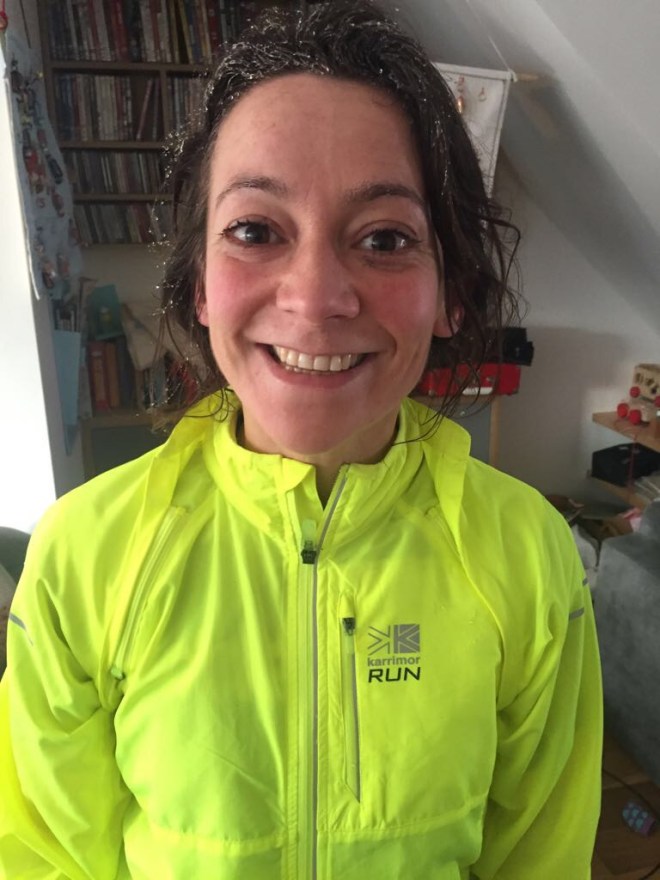
51B9EE8A-A681-4D45-8003-9E88FB47BD95This is the first time in my life I have gone running in December. It’s been cold!!!! That’s ice in my hair, the ice on my eyelashes had melted by the time we got the phone out. It’s been good!! This month I have run alongside robins, into sunsets, with friends, up hills, down hills, and last week I did 10 miles and felt great. And I did my first ever Parkrun which I loved – New Year’s Day double in Hove, where the waves came over the side of Hove Prom and soaked my shoes within 5 minutes of starting. I’m enjoying myself! So wishing you all a Happy New Year, here is January’s blog. It’s a bit of a long one I’m afraid, but please stick with it, it’s one of the most important I think.
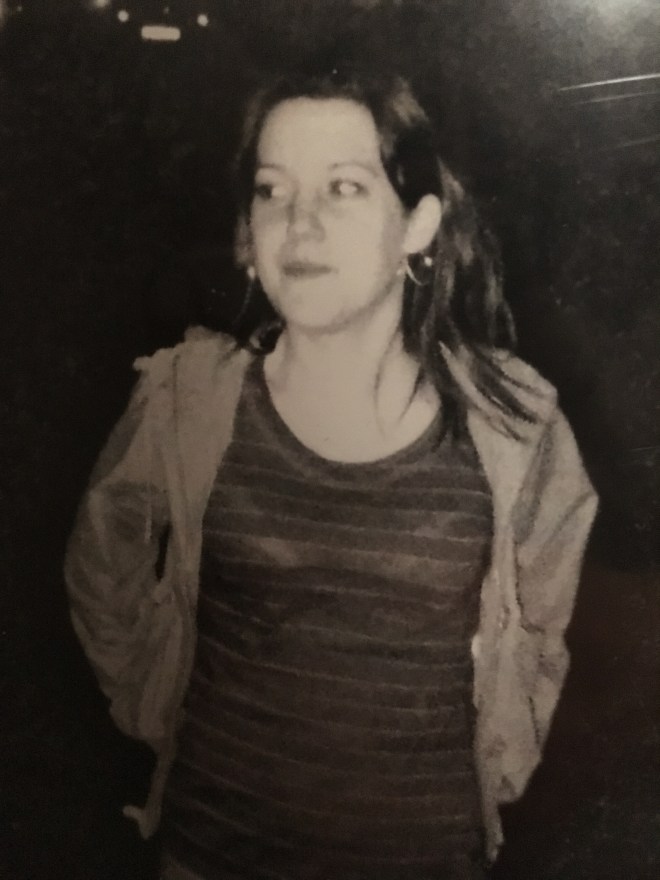
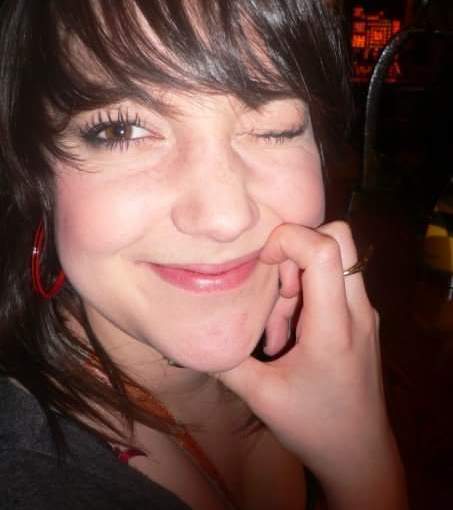
I had a bit of a wobble last month about the blog. A couple of things happened as a result of it that made me question it all a bit. Firstly, am I the right person to be doing this? Should I be talking about Eva in the blog in such a public way? A couple of notes on this: I am really trying to make this blog about me and my experience of Eva’s addiction. I am really trying not to assume anything about the reasons that she struggled so much with mental health, or talk about the bad things that happened because of her drinking. She is not here to correct me or guide me through that. And it misses the point. It is not about any of that. So I asked myself, “What is it about?” Is it for me? For catharsis? Maybe. Is it to remind people about her? I am constantly afraid that she’ll be forgotten. I know I love to talk about her, I love the fact I am getting to talk about her because I am so proud of her and I miss her and I love remembering her. But I know, in my heart of hearts, that this isn’t the main reason for it either. What I really want you to do in reading this blog is, forgetting the addiction, to look at her, look at us as a family, and see yourselves and your loved ones. I want you to see her not as “the other”, the “alcoholic”, but as one of “us”. We are all human and we all have vulnerabilites and we all have strengths and weaknesses and we all get sick from time to time. Some of us are lucky in that most of the time it is something acute and mild that we recover from and don’t have to face again, and some of us are less lucky. I know that Eva is a statistic somewhere, that she is a “person with an addiction” but she is you and she is me. She was unlucky, she got dealt a really bad hand.

FE1E060E-8915-4D15-BEC6-692DEE25B1C9

So, that’s the reason for writing. It’s the STIGMA. I’m sure that’s what I’m trying to change. Because if I hadn’t shown you her face or related her story or told you about her personality traits, she would have remained a statistic. You would have formed an opinion of her, as even I did when she was alive, as we all do as humans. Evolutionary psychology means it is innate, and media and fear facilitate it.

Stigma is defined by the Oxford English Dictionary as, “a mark of disgrace or infamy; a sign of severe censure or condemnation, regarded as impressed on a person or thing; a ‘brand'”. When I started writing these blogs, I honestly thought our story, given Eva’s age I suppose, might catch attention. I was hugely saddened that I didn’t have to look hard to find numerous stories written by people relating to the deaths of other young women with addictions. One mother tells the story of her daughter, Sammi, who took her own life. She was too ashamed, too ashamed of herself, too ashamed of her alcohol addiction to ask for help. Eva, too, had a couple of suicide attempts. That is the strength of stigma. It shames the vulnerable people who need us to sit down next to them and say, “I’m here when you need me, it’s ok, I’m listening and I love you.” Stigma marginalises people, it makes them “the other”. It stops people admitting to themselves that their drinking has become a problem, it stops people saying the words “I need help” and it stops people accessing support. We know that fewer people die who access support, so, I guess I can say that stigma kills. Sounds strong though doesn’t it. When life has the potential to be so wonderful, and we only get one shot at it, it seems a silly reason to die, people’s opinions.

Adfam, a society set up for improving support for families affected by drugs and alcohol, carried out some qualitative research about the effect of stigma on families of individuals with drug and alcohol addiction. One individual told of how, when he applied for a free bus pass he was told that due to his substance misuse issues, he would not be entitled to one. I was horrified to read this. I think of how vulnerable Eva was when she was starting her life again sober after rehab, and how much this would have affected her, not just the difficulties with bus travel but the treatment, the disapproval, the stigma, the judgement. How are people meant to recover when policies and stigma like this continues? When they are low and need support, and above all need to be treated as humans, they are marginalised.

The statistics from the report make me incredibly sad. They are mostly concerned with drug addiction but that’s irrelevant to me, it is about substance addiction.

“93% of people think that those with a mental illness deserve the best possible care.” Not dreadful but could be improved.

“68% think the same about people with a drug dependence.” Really sad. So obviously it is just not seen through the same eyes as mental health, does this mean that 32% believe they deserve substandard care? Or no care?

“58% of people think one of the main causes of drug dependence is lack of self discipline and willpower.” How misinformed. Could we counter that with the fact that 81% of women with addiction issues have been victims of physical and sexual abuse in younger years. That’s something that luckily many of us will never have experienced during our childhoods. So who are we to stand and look down our noses and condemn? We have no idea about that individual’s story, and a lot of the time it is because we don’t ask and we don’t care.

“23% of people believe that most people would not become dependent on drugs if they had good parents.” I need you to know how wonderful my parents are. That they adore my brother and I, do anything for us, tell me they love me every time we say goodbye on the phone, nurtured us through childhood, encourage us, are interested in the things we’re interested in, care about the things we care about. And when Eva was unwell, they were rocks. They supported her incredibly and kept the peace when I was making a mess of my relationship with her. Now, along with my husband and brother, they are truly my best friends. And I know I can say the same of my brother too. They are completely non-judgemental, which I adore about them, and they see humour in almost everything. It is telling that many of Eva’s friends keep in touch with them. They are gentle people, intelligent and interested. They are just the best people I know. Eva was supported strongly throughout her illness by them both, they did not cause it.

These statistics are from 2012. I would love to think that these opinions have changed somewhat, especially following the mental health marathon last year and the continued push in some areas of the media for more openness surrounding mental health issues. But I cannot help but feel that alcohol and drugs are continued to be seen as different. That the “moral failure” element prevails.

A research article published in 2010, “The Stigma of Alcohol Dependence Compared With Other Mental Disorders: A Review Of Population Studies” does not shy away from the realities of alcohol misuse. In this article they state that “some negative stereotypes like being dangerous or unpredictable, however, cannot simply be rejected as wrong.” But then continues, “We would argue, that in the case of alcoholism, even if they apply to some…..they hurt many more, particularly those struggling to recover from their illness. Affected individuals have a right to be judged by their personal behaviour, not by the stereotypes attached to a diagnostic label.”

Portugal does things differently. They have decriminalised all drugs. As a result, any kind of drug or alcohol induced “incident” will be treated with healthcare rather than criminalisation. The individual will be put through an addiction treatment programme, and then, most importantly, money that would ordinarily have been used to put them in prison, is used to find them a job, to reintegrate them, to give them a reason to get up in the morning, to reconnect them to society. Outcomes are great. This model has continued for over a decade now and regardless of changes of government has not been changed, because it works.

So how do we try and change the stigma? And what are we trying to achieve?

We talk about it. That is what my reasoning is behind this blog. I know it is. To make you maybe think twice. We talk about it, we talk about it as a health issue, we present more positive pictures in the media, we promote social inclusion like Portugal does, we look at people as people, we BELIEVE IN PEOPLE, we see people as humans that are hurting and we tell them we care. And what will it achieve? More people accessing support, less marginalisation in society, fewer lives lost. It seems such an achievable thing. I thank each and every one of you for reading these blogs, and I hope it has touched you or made you think in some way so far. The more people I reach the more people I have a hope are listening, so please, share with your friends. I have no doubt that this blog is not going to change the world, but it is changing me.

When she died, I drank. I drank to forget, to block out reality, to escape, I drank for all the same reasons she drank. The irony isn’t lost on me, especially given the strength with which I condemned her. I judged her. As her sister, I judged her. Just when she needed me. I thought she was “better” than alcohol addiction. That’s dreadful isn’t it, that is in complete contrast to everything I have talked about and learned about for this blog. I saw it as self indulgence, her fault, and that people with addiction were “below me”, “below us”, they were “the other”. Eva suffered with alcohol addiction, it could just as easily have been me, and how I would have crumbled and crawled under a rock and drank myself into a hole if people treated me the way she was treated by me, and by others. It just so turned out that out of the two of us, Eva and I, I was the lucky one. How unfair and cruel life can be sometimes.

Thank you so much for reading, and for all those who have donated, thank you again. I appreciate every single penny. If you haven’t donated already and you can spare any money at all for the cause, the link to my Virgin money giving page is below.

https://uk.virginmoneygiving.com/fundraiser-portal/fundraiserPage?pageId=854688

And if you need support:

https://www.addaction.org.uk/

https://www.alcoholics-anonymous.org.uk

And for family and friends:

Home


She moves in her own way….

Soooo….my 35 year old knees have started giving me problems already. I have seen my physio friend, Alan Law, who gets countless athletes through their challenges, and I have been told that I need to run less and get on my bike, for the time being. I HATE cycling. My husband, Nev, has been trying to get me cycling with him for years and I have always said no, but this week I have bought a turbo trainer to let me cycle in my front room and I’ve been on my bike….Being on the bike makes me cross. Nev has been taking cover. It makes me really mean. I am still running but fewer miles. The dark nights are quite nice to run in, my head torch doesn’t shine too far ahead so I never really know how steep or long the hill is, and this seems to be good for me. One foot in front of the other, head down. I recharged my very old Ipod and am discovering some hidden gems from uni, bit of Matchbox 20, New York Pony Club, the list is interesting and endless, evocative, emotional. Stuff I danced to with Eva. Old Arctic Monkeys that she introduced me to. Going to Mr Scruff for her 21st birthday. The Kooks – She Moves in Her Own Way – she loved that song.

So again, onto the reason behind all the running, the marathon and the blogging. My sister, Eva, died at 24 from alcoholism and because I had lived with her illness I thought I knew what it was, thought I was most probably the expert on how to manage it, told my parents that they should be tougher with her, I knew it all. I spoke in my last blog about why I thought it might be difficult to raise money for Addaction, that addiction tends to be seen as a moral failure or personal choice and is terribly stigmatised. When she was alive I blamed Eva for her addiction. I finally now feel able to learn about addiction and I am learning that I was very, very wrong. I want to tell you about it too, because it might make you think a bit differently about a person with addiction that you love, or a person with addiction that you encounter. If you have any money that you could spare for the cause, that’d be very much appreciated – someone like Eva could get huge help and benefit from Addaction, they continue to save and rebuild lives of people with addiction and their families – my justgiving link is at the bottom of the page.

So in this blog I wanted to talk about what made Eva different to you and me, because she was different.

  1. What made Eva different?

The neuroscientist, Nora Volkow, director of the National Institute of Drug Abuse, based in the US, gives a very interesting TED talk called “Why do our brains become addicted”.  She gives us some basic science: a chemical in our brain, dopamine, is released when we do something pleasureable, for example eat or have sex. This is an evolutionary mechanism – dopamine ensures that we want to eat and have sex. Dopamine makes us feel nice, we really like it. Our brains are hardwired to this reward to ensure our survival – we will continue to eat, we will continue to have sex and procreate. For Eva, alcohol increased the dopamine in her brain, in the same way it does for many of us after a glass of wine after a hard day, or a pint of beer at the end of a busy week. So what made her different?  With all the misery and failed relationships and chaos surrounding her, why didn’t she stop?

As you’d expect, it is complex and multifactorial. Johann Hari gives a wonderful TED talk and I urge you to watch it, “Everything you think you know about addiction is wrong”. In it he talks about an experiment involving a rat. The rat was put in a cage and offered 2 water bottles, one contained water, the other contained water laced with cocaine. The rat almost always used the cocaine compulsively and almost always overdosed and died. Years later, the experiment was repeated but with a twist. This time a scientist called Bruce Alexander created “Rat Park”, which was a cage with stimulation – other rats, tunnels, things to play with, and again, 2 water bottles, one containing water and the other water and cocaine. The results were incredible. This time, the rats barely touched the cocaine, never used it compulsively and never overdosed. Johann suggests that addiction is a disease of disconnection. He suggests the reason we don’t all become alcoholics is because we “have bonds and connections that we want to be present for”. He suggests that “a core part of addiction {…} is about not being able to bear to be present in your life”. The raw truth of this makes me cry. Johann Hari’s final words: “The opposite of addiction is not sobriety. The opposite of addiction is connection.” Throughout Eva’s illness she became more and more disconnected and her existence was a devastatingly lonely one. She declined offers of socialising and pushed people away. We couldn’t stop it happening, but she was so alone.

Aside from psychological differences, there are also physiological ones: Nora Volkow says that medical imaging of the addicted brain shows a decrease in something called D2 receptors – receptors in the brain that allow us to exert self-control. She says that simply and to the extreme, it is like driving a car without brakes and trying to stop the car – no matter how much you want to stop you will not be able to do it. After Eva died, one of her alcohol counsellors described her as “a bird with a broken wing”. I think she meant that Eva just wasn’t equipped to recover, that normality was so much harder for her than for other people, that it wasn’t a choice. And that is what I continue to read over and over again, that this IS NOT A CHOICE. Why would it be? As a family we watched powerless over years as her life became more and more chaotic, she lost friends, her university place, her independence, her dignity. Why would it be?

2. What made Eva different?

She was hugely underconfident. She was mentally ill. She was bulimic. She was alcoholic. She was depressed. She felt alone. She knew how to make her counsellors feel confident that she was coping. She knew how to make me feel that she was fine. Over and over again.

3. What made Eva different? 

She was very gentle. She never boasted, never shouted loudly, never drew attention to herself. People were drawn to her. She had a glint in her eye. She was hilarious – she was clever and quick and naughty. She never judged anyone. One of her best friends said that she would go to Eva sobbing and be laughing in minutes – and how incredible it was to have someone like that in her life. She liked people who were kind hearted. You felt special if you talked to her. She listened. She laughed at herself, with you, at you, at lots of things. There was always humour to be found somewhere. She loved laughing. She loved clothes shopping, makeup, music. She was a great dancer. She was really, really beautiful. These are all truths, not made up or embellished or rose tinted. Everyone liked her. We loved her. We adored her. We lost her.

IMG_6502

For all her wonderful and beautiful differences, the addiction won. Her family and friends carry the pain of it with us forever and it has changed us all. I miss her every day, I honestly think about her EVERY SINGLE DAY. And some days it still completely floors me, like the moment we got the phone call. I actually can’t breathe. Silly, simple things. Last year I went Christmas shopping and I forgot that I didn’t need to buy her anything, after 7 years. I had to hold the handrail and steady myself and closed my eyes for a couple of seconds before leaving the shop quickly. The loss of her is physical, it makes me ache. And it feels worse because it was so unnecessary.  People do survive and have wonderful, fulfilled lives. But the vast majority need support to do it. That’s where Addaction comes in.

Addaction help support people with addiction and their family and friends through recovery and beyond, please, please help if you can. They save lives. Thank you.

http://www.tedmed.com/talks/show?id=309096 Nora Volkow – “Why do our brains become addicted?”

https://uk.virginmoneygiving.com/fundraiser-portal/fundraiserPage?pageId=854688


Eva

Training is going well. I ran my first 10k for years the other night and felt comfortable……. I have a headtorch and I feel really excited. Advice about just looking at the next run rather than the marathon has helped. It still seems a completely unattainable goal but I am plodding on! Thanks so much for all your messages of support and your money. The first blog was really emotional for me.

Now onto the reason for all of this…..

I knew I wanted to run the London marathon for charity and after some consideration I applied for a place with Addaction, knowing how their support would have helped Eva and my family. However, £2000 is a lot of money to raise, and I’m especially nervous because I can’t help but think this must be a cause that finds it difficult to elicit sympathy in the public. Addiction is so often seen as self inflicted. I want to raise as much money as I can for Addaction, but I also want to provide something a little bit thought provoking and maybe change people’s views a little bit. I am not professing to be an expert in anything, far from it, but I know my story.

Looking at an alcoholic or drug addict is not comfortable. It does not evoke feelings of sympathy or wanting to help or protect. Their behaviour is unpredictable and undesirable and sometimes they do horrendous things to feed their addiction. People lose sympathy quickly. After Eva’s inquest there was a short article in the Hull Daily Mail and I went online to read it. A few comments left by members of the public were horrendous, unthinkable. People didn’t care. She was an alcoholic.

The behaviours of an alcoholic mean that they can be very, very hard to love. Over years as this behaviour becomes the norm, it is easy to forget the essence of who that person is and easy to judge and easy to be angry, furious, with them. In the depths of the disease, I forgot. I was furious all the time. I was furious for all the phone calls about another drama that she’d caused, another inconvenience to my parents, another inconvenience to me, another argument. The list of bad things that happened as a result of her drinking went on and on and on. At the beginning I tried to be there for her. As the years went by I lost patience. I tried to catch her out and when that didn’t work, I threatened her. “If you don’t stop you will lose me”. On one of the occasions she was in rehab I got a letter from her and I was so excited to open it. I thought she might finally be apologising. I was wrong. She was telling me how hard I’d made it for her, how small I’d made her feel, how she would never let anyone make her feel the way I made her feel. And I thought, “That is the addiction talking. That might be her counsellors. They have no idea what it’s like. I did not behave badly, this is all because of Eva, not me. I will not apologise. This is not my fault.” The letter was devastating. I was young, I was completely ignorant and I was just so angry. And I had the arrogance of sobriety. Now though, the more I read about addiction the more I realise she was right. What she had needed all along was more love and unconditional support and I threatened to take it from her. Her last few threads of support. I have huge guilt but am comforted by similar experiences from others and the fact that I know living with an addict is really, really hard. I wish I could have handled things differently, I wish I could have done better. I really tried. I just had no idea what to do and I didn’t understand.

For a long time after she died I had bad memories. I just couldn’t remember what life was like, what Eva was like, before the drinking started. Even after she died, my most recent memories were formed around her drunken events and that’s what came to mind whenever I thought about her. I was absolutely devastated, but I was still angry. These memories are etched on me but have become much less significant over the years. It has taken time because she was unwell for all of her adult life. Now when I think of her I remember stories of when we were kids, stupid stuff we did together and all the love and laughter we had between us all which was incredible. Eva of course, wasn’t her addiction.

This was Eva:

gaK2vSO3rPGPZ1Xhsiv48g_040
And this was who she was.


When I needed reminding, my mum used to tell me that Eva would never have chosen to be an alcoholic and we are sure that she did not choose to die. She did not aspire to the lifestyle. No one does. She drank because she felt sad and alone and depressed. She was mentally ill and it helped her to escape her reality. It was NOT her fault and she was NOT her addiction.

Every person with an addiction is a person.

No person with an addiction is their addiction.

Every single one needs support, every single one needs love.

http://uk.virginmoneygiving.com/MagdaBannister

Off we go……

London marathon has been on my radar for years, but never more than last year. I spent the day glued to the TV in tears. My friend, Paul, ran London Marathon as part of the Mind Over Marathon documentary by the BBC, with my sister’s name across his back. I cried and cried. And I watched him cross the finish line and I cried harder. I was surprised at myself. I have no idea the work involved for Paul, the training hours and early starts and injury struggles. I just knew that this was a massive achievement for him. To think my sister, Eva, had helped to motivate him made me hugely proud.

So this year it is my turn. I want to do it. I want to run with Eva’s name on my back. I have ticked a box to say I have committed, I have had an email to welcome me to the team, I have new trainers….. so far I have it all. Except the fitness or running ability. This is my challenge. I am ready to tell my story.

Today is her birthday. She’d have been 31.

Eva was 24 when she died. She suffered for years from mental health problems, manifesting in bulimia and alcoholism. These were diseases that pushed us to the brink, diseases that we all hated. Alcoholism was ultimately the disease that killed her.

I cannot tell you enough how loved she was. Not just by family, she had so many friends. She was naughty and she had the most wicked sense of humour. The naughtiest and the funniest of the 3 of us. Gentle. And she was so so loved. It became easy during the darker days to forget all of that. And I imagine that is the same for many family and friends of people with addiction too. But each person with an addiction is suffering, each person with an addiction needs support and love, each person with an addiction is someone’s son or daughter, husband or wife, mother or father. Or sister. My sister. We lost Eva, and it has changed our lives forever and we miss her every single second. I am running to help someone else now. Every person with an addiction can do it, every one needs and deserves a chance. There are success stories and above everything there is hope. THERE IS HOPE.

I did my first run on Wednesday, just over 3 miles and it was really hard. The marathon at the moment seems impossible but I am assured it is doable. I am going to think about Eva and also all those who are fighting for sobriety, theirs is a harder and braver fight. I am running to raise £2000 for Addaction, a charity involved in the support of people with addiction, families, friends and young people to help them get through hard times and support them through recovery. I will be trying to learn about addiction and document my journey and along the way gain some support (and money) from you all. Wish me luck x

http://uk.virginmoneygiving.com/MagdaBannister