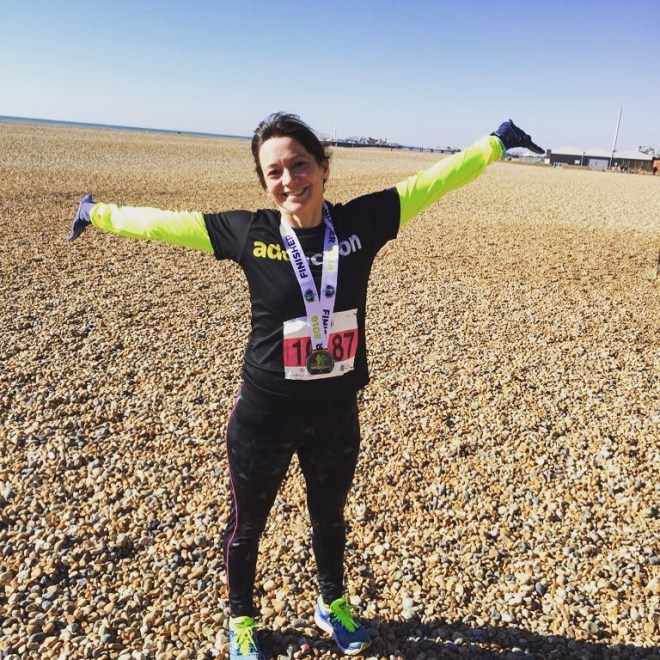
On Sunday 25th February I completed the Brighton Half Marathon in 2.04. I cannot tell you how proud of myself I am. I still remember the first 3 mile run back in October. It felt dreadful. I never thought I would get to this point. So I am really, really chuffed. It has also scared me – in a few weeks I am hoping to double this distance! I have been training since October to get here, but now it all ramps up. I’m terrified. It feels a million miles away. But, you’re behind me, and I plan to keep going, just do what I can, head down. I have wonderful supporters in you all. Someone suggested last month that I organise for people to come and help me on one of the long runs, so on Sunday March 25th, I am planning an 18 miler and I already have a little group of people, of all abilities, who are planning to come and run anything from 1-18 miles along the course with me, to keep me going. I’m hoping May will run the last mile with us. We will start somewhere in Brighton about 2pm and finish at the Anchor pub in Ringmer about 5.30 where we plan to eat and drink with friends and family. This will be a SLOW run. So, if anyone fancies it, regardless of ability, or even just fancies coming to the pub for dinner and drinks, let me know. It really is the more the merrier.
This month’s blog is about recovery. Recovery is what this is all about. This is what your money’s for. Recovery is hard, it’s long and it’s brutal. But for the people involved it’s necessary and life saving. I have been a bit lost trying to write this month’s blog, I’ve struggled to get started because when it comes to recovery, I have no comparison to draw. There is nothing I have done in my life so arduous or important. I don’t have a clue what’s involved. So, I have had to research and read books and talk to people who do know. You can find statistics somewhere about recovery and maybe I should have done that. But I haven’t. Because what interests me are the personal stories and experiences, how people do it and what they go through to get there. It’s all about the people. The science is interesting and helps to understand things, but this blog has always really only been about the personal, the people involved, because I am involved, and this is what matters most to me. So to help me find out more about recovery for people with addiction, I read blogs and books, and I spoke to Beth at Addaction, and I spoke to Sharna who has lived experience of recovery. This is what I found.
Recognising there’s a problem
Recovery has to start by the individual recognising that there’s a problem. AA has a 12 step programme to aid recovery. The first is this:
“We admitted we were powerless over alcohol – that our lives had become unmanageable.”
Most people I know drink. I drink. Alcohol is so embedded in our society and in our culture, alcohol is so much a part of who we are. And there is such a spectrum of “acceptable” drinking. It makes alcohol dangerous because the addiction can be so insiduous, so easily missed, so easy to hide. It makes it so easy to deny, to others and to yourself. And the stigma surrounding alcohol misuse is still so ingrained is us as a society, that this obvious first step is not an easy one. Recognition of the problem has to come with a letting down of defences. So this admission to being powerless over alcohol, this readiness to seek help, this mental preparation to change, there isn’t a quick process to arrive here. Then a discussion has to happen. A GP, an AA attendee or sponsor, a friend, a family member. Words matter. Once these words are spoken, they’re spoken. These are words that can’t be taken back. This is not discussing options for dinner or talking about the weather. These are words that weigh heavy, they hang, these words mean something important, these are considered words, these words have consequences. These are powerful, relationship altering, direction changing, humbling words. And the consequences are significant. I cannot imagine the fear. I cannot imagine the bravery.
I don’t remember being a part of this discussion with Eva. I tried to be. I tried to broach it gently, I took her for coffee, I tried to let her know I was there. But although I thought our relationship was good at this point, we had already been through tricky times whilst she was being treated for her eating disorder. She knew about addiction before she became an alcoholic. I could never understand. And because I’d found her eating disorder hard to deal with I lost the privilege of being a confidante this time. I don’t remember, but at some point she must have spoken the words because treatment started.
INTERVENTIONS
Then? Detox. Depending on your alcohol intake you either detox at home in hospital. Those with higher intake, like Eva, have to have detox as an inpatient because of the risk of seizures.
Then? GP appointments, alcohol liaison nurses, rehab waiting lists, rehab, AA meetings. Each bringing with it an inventory of actions, brutal self analysis, rebuilding battered self worth, coping strategies, short term goals, reminders of why you want sobriety so badly. Energy sapping, motivational, emotional, tiring. Worth it.
Then? Minutes, hours, days, weeks, months, lifetimes of sometimes very hard fought sobriety.
How does it work? I have just devoured the most wonderful new book. The Unexpected Joy of Being Sober is a Sunday Times bestseller, released in December 2017, by Catherine Gray. It has taught me so much about the journey to sobriety and Catherine explains things so wonderfully. She provides clever analogies to explain the physiology of why the brain finds it so difficult to readjust. Firstly, she notes an academic paper that talks about neural pathways in the brain as hiking trails. “The more a hiking route is used, the smoother, wider and clearer it becomes. It becomes the default, easiest route. Should you need to forge a brand new path through the forest (or form a newborn sober pathway) the paper points out it will be arduous initially. ‘At first, this new path will be narrow, difficult and slow…..Over time it will become a well-worn, comfortable path. It will be just as easy as the original path'”. Your brain changes with recovery, neural pathways remodel. It doesn’t happen quickly. It doesn’t happen overnight.
Sharna, the woman I spoke to about her lived recovery was amazing. She was so open, and rightfully proud of her recovery, and I was told that no question was off limits. So I asked them.
I asked how hard it was. At the right time, she said, it was easy. She said it was easy because she was absolutely desperate. She’d hit rock bottom. She had tried to stop drinking before but hadn’t managed, which she put down to the fact that she wasn’t truly doing it for herself. She said this last time was different. She threw herself into AA, into the 12 steps, into sobriety, and it worked.
I asked how good life was now. What did I imagine her to say? A struggle every day? That she spent every minute fighting? She said it was good. She felt under control. She said that now her coping strategies had to be different but she’d spent a lot of time learning about that as part of her recovery. She said that life can be hard sometimes, but life can be hard for everyone sometimes, and that it is a hell of a lot easier without the alcohol. Sharna also said, which I believe wholeheartedly, that only someone who has addiction can truly understand. So the other thing that really got her through was the recovery community. After I left her, I couldn’t stop thinking about it.
Catherine Gray’s book talks about this too. She interviews academics who talk about the “language analogy”. I am going to quote directly from her book again, I can’t explain it better. Catherine says “learning how to socialise without drinking is like learning a whole new language, say Spanish. And having to resist using our mother tongue.” This is why it is suggested that people socialise with sober friends initially, to try and remove the allure and the ease of “slipping back into English”, having a drink. From what I can see, peer support during recovery is huge. When I started to look at the recovery community online, there seemed to be quite a presence. Sharna agreed, she thinks there has been an increase in awareness and recovery groups over the last few years. We sat with a coffee in the Cascade Creative Recovery Cafe in Brighton, run for people in recovery, by people in recovery. It was warm, it was welcoming, people came and went over the course of our chat. There were posters and adverts for support groups, AA meetings, timetables, Al-Anon meetings, the Cascade Recovery Choir, Crafternoons on Saturdays. This cafe is loved by people, a lifeline for people, a place where people can be listened to and heard and supported by people who know, who understand. From our chat, and from the chats Sharna had with people who were coming and going, I started to really feel the significance of it. Recovery is an ongoing journey. Other people can support and love, and that’s vital too, but no-one will understand like another person who has been affected.
I understand community. I understand it’s power, it’s impact, it’s results. I have not been running alone through these months. I have had support at home to free my time up to write and to run, I have run with numerous friends, friends who came back for me when I needed a rest, friends who have spurred me on and kept me going when I was ready to stop, friends who have sent supportive cards, friends who have sent supportive messages, or messages to say that the blog and the running is helping them in some way. I have not been doing this alone. I have been doing this with all of you. I couldn’t be doing it without you. I honestly just would not have kept going. You are my support. You are my community. Community helps people run marathons. Community helps people dry out. Community helps keep people sober. Community helps keep people alive.
I read a quote on a sobriety Instagram page, hipsobriety, the other week. It said, “We’re all just walking each other home”. I can’t say I go in for this kind of motivational quote much but I loved it, but I didn’t really know why. I wasn’t really sure what it meant. I have thought about it a lot, and this is what I take from it: we ALL have something. We ALL have something that is a challenge for us. None of us lead picture perfect, Instagram lives. All of us have vulnerabilites and we all have to help each other when we are at our most vulnerable. That is what thay saying means to me. On our way through life, we all need help and support at some point, and it is the companionship, the people, the communities that walk us home and get us to a safer, more comfortable place. “We are all just walking each other home.”
I spoke to Addaction about exactly what they do to aid someone’s recovery. They support adults, young people, families. They give “wrap around” care, this is holistic, person-centred care to promote recovery. This means not just dealing with alcohol but looking at support with housing, benefits, therapy including Cognitive Behavioural Therapy, building self esteem and confidence. They provide some inpatient rehab beds, they support people through detox. They encourage participation in the wider community – employment, volunteering, exercise, allotments, boxing gyms, farms. Anything that they can access or do to improve someone’s self worth and provide purpose, and lessen the risk of relapse, and promote recovery, they will do. The young persons service works closely with the Amy Winehouse Resilience Programme, who oversee people in recovery going into schools to give assemblies and facilitate workshops. These are not preachy assemblies about the evils of drugs and alcohol, Addaction knows that doesn’t work. These are workshops working on self esteem, talking about peer pressure. When 1 in 5 of us are currently affected by addiction, directly or indirectly, this is just such important work and this is where your money’s going.
So what have I taken from reading Catherine Gray’s book, from speaking with Sharna? From Addaction? The message I take:
YOU ARE NOT ALONE.
YOU CAN DO IT.
IT IS WORTH IT.
I mentioned in the last blog that I drank after she died. This was not problematic drinking. I had a hangover once or twice, but it did not cost me more than money. I just drank more than I had before she died during my initial grief. And I told you that I drank for the same reasons she did – to escape my reality at that time. I could not cope with the fact that Eva was gone, I could never talk to her again, never touch her again, or smell her, or make her laugh. The permanence of her death was incomprehensible to me, and absolutely devastating. I have no idea what addiction feels like. I have no idea what recovery feels like. But I understand the pull of alcohol. I was grieving, and I took antidepressants and I drank alcohol to make my pain go away for a little bit. I preferred the release of it, the numbness, the dumbed down emotion, however short term, to the reality and the unbearable rawness of my life during those first few weeks after Eva died. Then I imagine not having access to antidepressants and not being able to drink to forget. Being surrounded by her death, being cocooned in it, being saturated by it, having to look at it in the face and not avert my eyes, having it whisper in my ear when I was thinking about something else, not just for a moment, but day after day and week after week. It is the worst thing that has ever happened to me in my life. I did not want to live every detail of it, like I would a wedding. I did not want to know what was happening to me, I did not want to remember, I did not want to absorb it. I wanted the days to pass without me, I wanted to wake up months later when it was all a bit more manageable. I could have coped without medications and alcohol, but why would I have wanted to? I did not want to be present in my life. Recovery for someone with an addiction is asking them to be present in their reality, and not just the initial reality they were trying to escape from. Their new reality. Recovery reality is having to come to terms with a new life, facing all the things you did in the throes of addiction, the chaos you caused, the relationships you neglected. Guilt, stigma, shame, regret, trying to apologise, build bridges, fear of relapse and the impact of that fear. In Catherine’s book she quotes a recovery saying, “The best thing about recovery is that you get your emotions back. The worst thing about recovery is that you get your emotions back.” And all this with absolutely no respite. You cannot just have a drink at the end of a bad day. You cannot just speak English for a while. There is no option but to LIVE recovery.
So those that you know, those who have spoken the words, those who are sober, and those that are surviving, those that are living, those that are thriving, they are some of the strongest people you will ever meet.
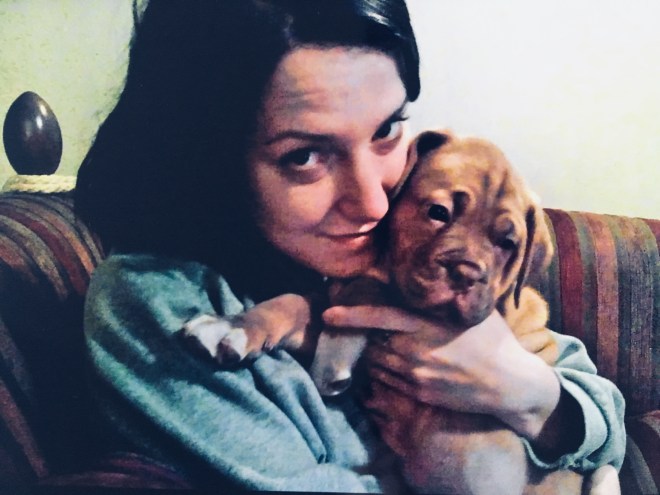
How was Eva’s recovery? Hard I think. She was waiting for a place in rehab again. She worked hard for the sobriety she fleetingly had. For her it was really, really hard. And she lost.
How was my recovery? Hard. I too, will never be recovered. I cope with it, I get a lot of joy from my life. But I’ll never be recovered.
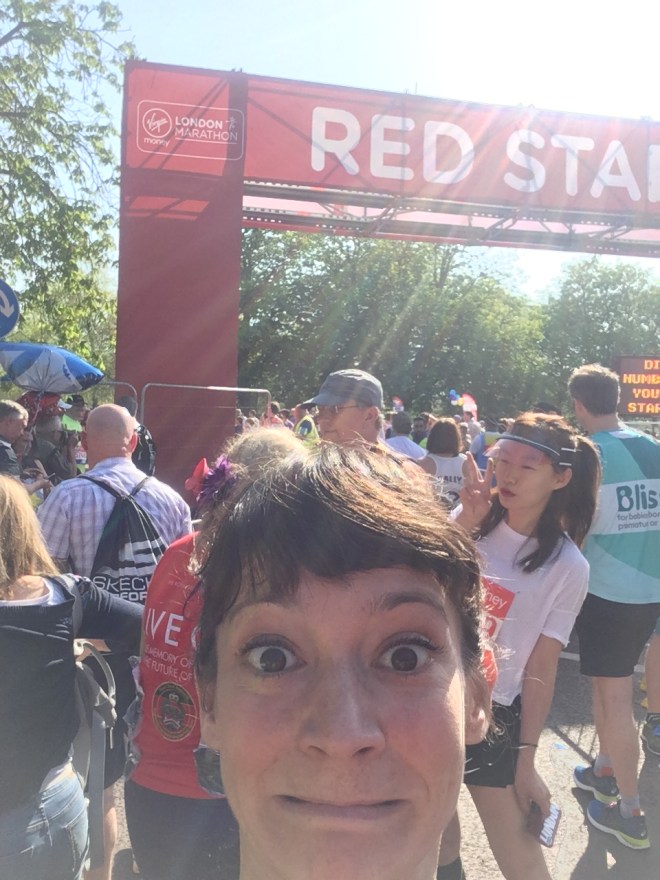
So, as ever, a huge thank you for reading, I am obviously aware that these are not easy blogs to read, but you seem to keep coming back, so thank you. I am really trying to get them read by as many people as possible, so please share widely if you can. And a huge THANK YOU to those of you who have donated so far. I have smashed the £2000 I was initially aiming for so have a brand spanking new £3000 goal! The marathon’s getting closer……. so please donate if you can! Here is the link to my Virgin Money Giving page:
https://uk.virginmoneygiving.com/fundraiser-portal/fundraiserPage?pageId=854688
And links to support:
https://www.addaction.org.uk/
https://www.alcoholics-anonymous.org.uk/
Home
http://ukna.org/
Cascade Creative Recovery Cafe, Brighton:
https://www.google.co.uk/url?sa=t&rct=j&q=&esrc=s&source=web&cd=2&cad=rja&uact=8&ved=0ahUKEwisk7PD4J7ZAhXrKcAKHRcpC5UQFgguMAE&url=https%3A%2F%2Fen-gb.facebook.com%2FCascadeCreativeRecovery%2F&usg=AOvVaw3KH63M7KVsPeq8NKPSNc1e
Catherine Gray’s book: The Unexpected Joy of Being Sober (all good bookshops and online booksellers)


![n61412306_37154750_8209[1]](https://mymarathon2018.blog/wp-content/uploads/2017/11/n61412306_37154750_82091.jpg?w=660)
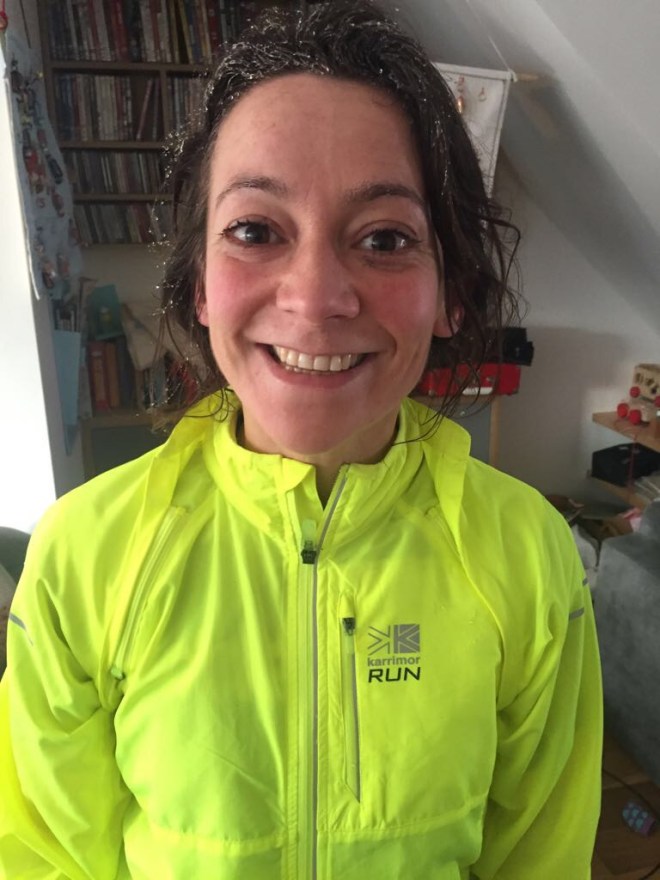 This is the first time in my life I have gone running in December. It’s been cold!!!! That’s ice in my hair, the ice on my eyelashes had melted by the time we got the phone out. It’s been good!! This month I have run alongside robins, into sunsets, with friends, up hills, down hills, and last week I did 10 miles and felt great. And I did my first ever Parkrun which I loved – New Year’s Day double in Hove, where the waves came over the side of Hove Prom and soaked my shoes within 5 minutes of starting. I’m enjoying myself! So wishing you all a Happy New Year, here is January’s blog. It’s a bit of a long one I’m afraid, but please stick with it, it’s one of the most important I think.



 My London Marathon 2018