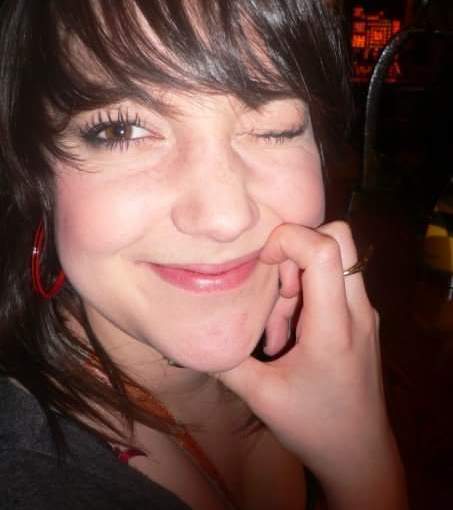
Soooo….my 35 year old knees have started giving me problems already. I have seen my physio friend, Alan Law, who gets countless athletes through their challenges, and I have been told that I need to run less and get on my bike, for the time being. I HATE cycling. My husband, Nev, has been trying to get me cycling with him for years and I have always said no, but this week I have bought a turbo trainer to let me cycle in my front room and I’ve been on my bike….Being on the bike makes me cross. Nev has been taking cover. It makes me really mean. I am still running but fewer miles. The dark nights are quite nice to run in, my head torch doesn’t shine too far ahead so I never really know how steep or long the hill is, and this seems to be good for me. One foot in front of the other, head down. I recharged my very old Ipod and am discovering some hidden gems from uni, bit of Matchbox 20, New York Pony Club, the list is interesting and endless, evocative, emotional. Stuff I danced to with Eva. Old Arctic Monkeys that she introduced me to. Going to Mr Scruff for her 21st birthday. The Kooks – She Moves in Her Own Way – she loved that song.
So again, onto the reason behind all the running, the marathon and the blogging. My sister, Eva, died at 24 from alcoholism and because I had lived with her illness I thought I knew what it was, thought I was most probably the expert on how to manage it, told my parents that they should be tougher with her, I knew it all. I spoke in my last blog about why I thought it might be difficult to raise money for Addaction, that addiction tends to be seen as a moral failure or personal choice and is terribly stigmatised. When she was alive I blamed Eva for her addiction. I finally now feel able to learn about addiction and I am learning that I was very, very wrong. I want to tell you about it too, because it might make you think a bit differently about a person with addiction that you love, or a person with addiction that you encounter. If you have any money that you could spare for the cause, that’d be very much appreciated – someone like Eva could get huge help and benefit from Addaction, they continue to save and rebuild lives of people with addiction and their families – my justgiving link is at the bottom of the page.
So in this blog I wanted to talk about what made Eva different to you and me, because she was different.
- What made Eva different?
The neuroscientist, Nora Volkow, director of the National Institute of Drug Abuse, based in the US, gives a very interesting TED talk called “Why do our brains become addicted”. She gives us some basic science: a chemical in our brain, dopamine, is released when we do something pleasureable, for example eat or have sex. This is an evolutionary mechanism – dopamine ensures that we want to eat and have sex. Dopamine makes us feel nice, we really like it. Our brains are hardwired to this reward to ensure our survival – we will continue to eat, we will continue to have sex and procreate. For Eva, alcohol increased the dopamine in her brain, in the same way it does for many of us after a glass of wine after a hard day, or a pint of beer at the end of a busy week. So what made her different? With all the misery and failed relationships and chaos surrounding her, why didn’t she stop?
As you’d expect, it is complex and multifactorial. Johann Hari gives a wonderful TED talk and I urge you to watch it, “Everything you think you know about addiction is wrong”. In it he talks about an experiment involving a rat. The rat was put in a cage and offered 2 water bottles, one contained water, the other contained water laced with cocaine. The rat almost always used the cocaine compulsively and almost always overdosed and died. Years later, the experiment was repeated but with a twist. This time a scientist called Bruce Alexander created “Rat Park”, which was a cage with stimulation – other rats, tunnels, things to play with, and again, 2 water bottles, one containing water and the other water and cocaine. The results were incredible. This time, the rats barely touched the cocaine, never used it compulsively and never overdosed. Johann suggests that addiction is a disease of disconnection. He suggests the reason we don’t all become alcoholics is because we “have bonds and connections that we want to be present for”. He suggests that “a core part of addiction {…} is about not being able to bear to be present in your life”. The raw truth of this makes me cry. Johann Hari’s final words: “The opposite of addiction is not sobriety. The opposite of addiction is connection.” Throughout Eva’s illness she became more and more disconnected and her existence was a devastatingly lonely one. She declined offers of socialising and pushed people away. We couldn’t stop it happening, but she was so alone.
Aside from psychological differences, there are also physiological ones: Nora Volkow says that medical imaging of the addicted brain shows a decrease in something called D2 receptors – receptors in the brain that allow us to exert self-control. She says that simply and to the extreme, it is like driving a car without brakes and trying to stop the car – no matter how much you want to stop you will not be able to do it. After Eva died, one of her alcohol counsellors described her as “a bird with a broken wing”. I think she meant that Eva just wasn’t equipped to recover, that normality was so much harder for her than for other people, that it wasn’t a choice. And that is what I continue to read over and over again, that this IS NOT A CHOICE. Why would it be? As a family we watched powerless over years as her life became more and more chaotic, she lost friends, her university place, her independence, her dignity. Why would it be?
2. What made Eva different?
She was hugely underconfident. She was mentally ill. She was bulimic. She was alcoholic. She was depressed. She felt alone. She knew how to make her counsellors feel confident that she was coping. She knew how to make me feel that she was fine. Over and over again.
3. What made Eva different?
She was very gentle. She never boasted, never shouted loudly, never drew attention to herself. People were drawn to her. She had a glint in her eye. She was hilarious – she was clever and quick and naughty. She never judged anyone. One of her best friends said that she would go to Eva sobbing and be laughing in minutes – and how incredible it was to have someone like that in her life. She liked people who were kind hearted. You felt special if you talked to her. She listened. She laughed at herself, with you, at you, at lots of things. There was always humour to be found somewhere. She loved laughing. She loved clothes shopping, makeup, music. She was a great dancer. She was really, really beautiful. These are all truths, not made up or embellished or rose tinted. Everyone liked her. We loved her. We adored her. We lost her.
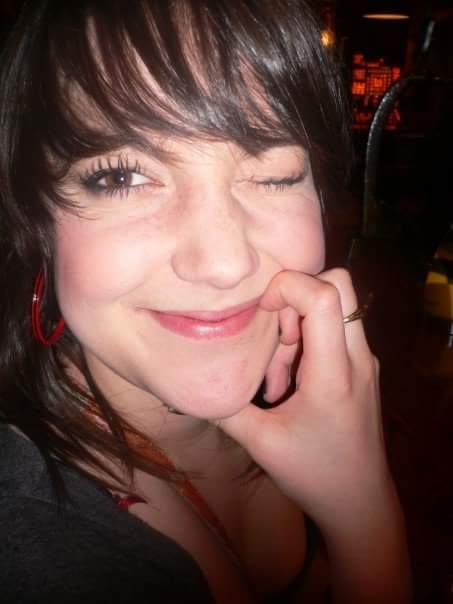
For all her wonderful and beautiful differences, the addiction won. Her family and friends carry the pain of it with us forever and it has changed us all. I miss her every day, I honestly think about her EVERY SINGLE DAY. And some days it still completely floors me, like the moment we got the phone call. I actually can’t breathe. Silly, simple things. Last year I went Christmas shopping and I forgot that I didn’t need to buy her anything, after 7 years. I had to hold the handrail and steady myself and closed my eyes for a couple of seconds before leaving the shop quickly. The loss of her is physical, it makes me ache. And it feels worse because it was so unnecessary. People do survive and have wonderful, fulfilled lives. But the vast majority need support to do it. That’s where Addaction comes in.
Addaction help support people with addiction and their family and friends through recovery and beyond, please, please help if you can. They save lives. Thank you.
http://www.tedmed.com/talks/show?id=309096 Nora Volkow – “Why do our brains become addicted?”
https://uk.virginmoneygiving.com/fundraiser-portal/fundraiserPage?pageId=854688
 My London Marathon 2018